



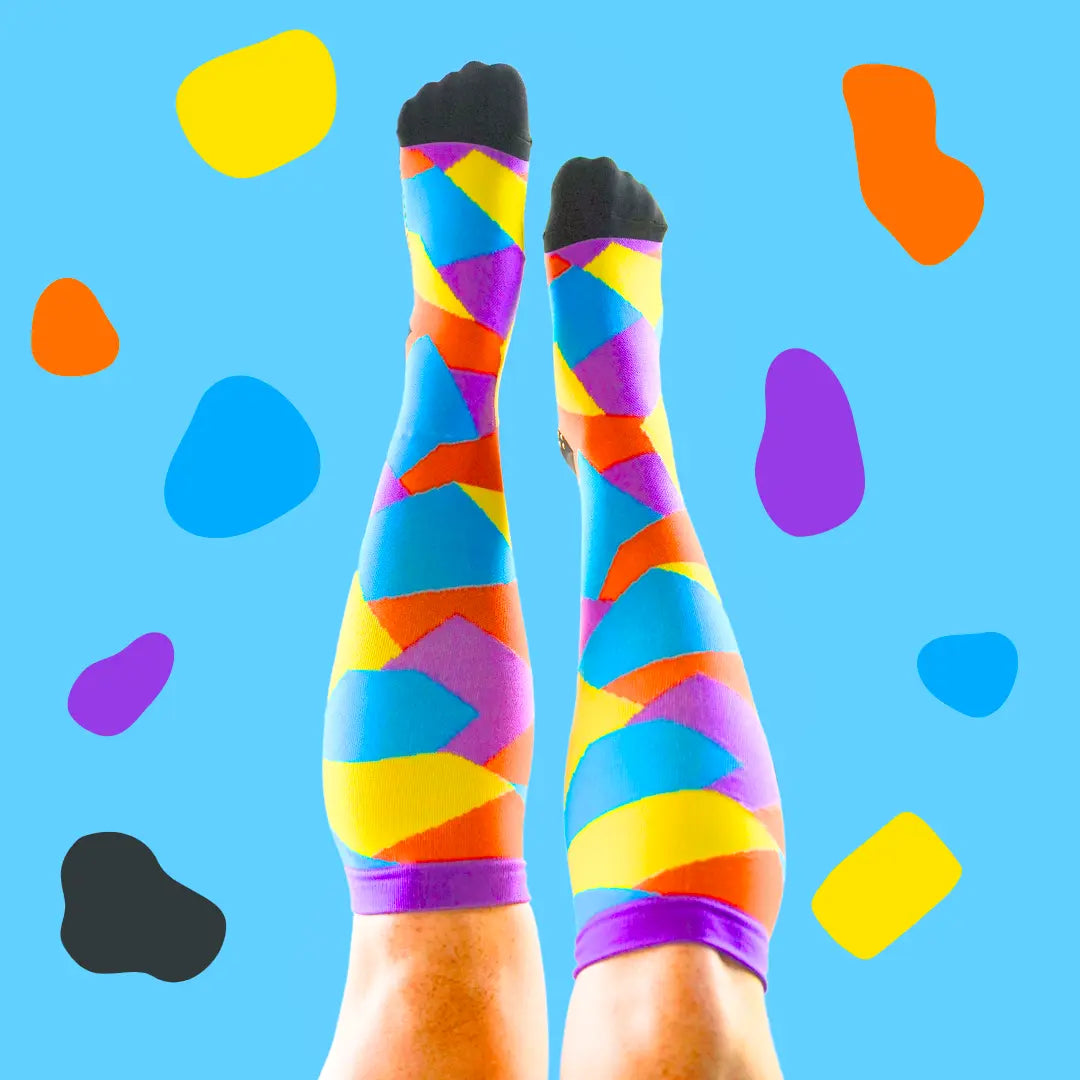


Compression socks for lymphoedema are designed to provide graduated compression that improves lymph fluid drainage, reduces swelling, supports long-term symptom control, and helps lower the risk of cellulitis and other complications when used as recommended. They can benefit people with primary and secondary lymphoedema, including leg lymphoedema and swelling after cancer treatment, by supporting lymphatic fluid movement and working with natural muscle activity to improve fluid return.
Choosing the right compression socks depends on the recommended compression level, knit type, garment length, and features such as medically graded fabric, seamless construction, breathability, and an accurate fit. Wearing them correctly, replacing them when they lose elasticity or compression, and following proper washing and drying instructions help maintain their effectiveness. Compression socks for lymphoedema are often used alongside manual lymphatic drainage, multi-layered bandaging, exercise, and good skin care as part of a comprehensive long-term lymphoedema management plan.
Are Compression Socks Good for Lymphoedema?
Yes, compression socks are good for conservative lymphoedema management because they apply graduated pressure to improve lymph fluid drainage, reduce swelling, support long-term symptom control, lower cellulitis and infection risk, and provide firm, even pressure when correctly fitted and clinically prescribed. Their effectiveness depends on the correct compression level, accurate garment fit, regular wear, and guidance from a healthcare professional.
5 key benefits of compression socks for lymphoedema are:
- Improve lymph fluid drainage
Compression socks help improve lymph fluid movement by supporting lymph transport and reducing fluid accumulation within affected tissues. Their graduated pressure helps move excess interstitial fluid toward functioning lymphatic pathways, supporting long-term swelling management. In a 2024 multicentre study of 97 patients with stage I–II lymphoedema, a flat-knit compression garment maintained oedema control and reduced limb circumference by a mean of 3.1 ± 7.3 cm over three weeks (p = 0.0001). Patients also reported improvements in heaviness, tension, mobility, and quality of life, supporting sustained compression therapy for lymphoedema management (Hirsch et al., 2024).
- Reduce swelling
When lymphoedema causes limb swelling, compression socks help control it by reducing fluid build-up in the affected limb. Their graduated pressure supports lymph drainage, helping maintain a healthier limb volume while reducing discomfort, heaviness, and movement limitations associated with persistent swelling. A 2025 randomised controlled trial involving 24 patients with stage II–III bilateral leg lymphoedema found that compression wraps achieved clinically significant lower-leg volume reduction during 10 days of intensive decongestive therapy, confirming that compression is effective for reducing limb swelling (Reisshauer et al., 2025).
- Support long-term symptom control
During the maintenance phase of lymphoedema care, compression socks help support long-term symptom control by maintaining swelling reductions achieved during treatment. Their graduated pressure helps prevent worsening swelling, supports daily function, and encourages effective self-management, allowing people to remain active and manage their condition more consistently. While compression socks do not stop disease progression, regular use as part of maintenance therapy helps preserve treatment outcomes and reduce symptom recurrence.
- Reduce risk of cellulitis and infection
Compression socks help reduce factors associated with recurrent cellulitis by controlling swelling, limiting fluid accumulation, and supporting healthier skin integrity. By reducing persistent oedema, they decrease skin tension, help preserve the skin's protective barrier, and lower the likelihood of cracks or damage that allow bacteria to enter the affected limb. A 2025 randomised controlled trial involving 73 patients with recurrent lower-leg cellulitis found recurrence in 13.9% of patients receiving compression therapy compared with 37.8% receiving standard treatment alone, supporting compression therapy as part of recurrent cellulitis management.
- Provide firm, even pressure
For people with lymphoedema, compression socks provide firm, even pressure through a graduated compression profile that delivers the highest pressure at the ankle and gradually reduces further up the lower leg. This controlled pressure pattern supports fluid return, limits fluid accumulation, helps maintain effective swelling control, and promotes stable limb volume throughout the day. Consistent pressure distribution also reduces areas of excessive pressure or fluid pooling, improving comfort while supporting ongoing lymphoedema management.
What Does Research Say About Compression Socks for Lymphoedema?
Current clinical evidence supports compression socks and other compression garments as a cornerstone of lymphoedema management, particularly during the maintenance phase after initial swelling has been reduced. Their effectiveness is supported by evidence from randomised controlled trials, systematic reviews, and meta-analyses evaluating a range of compression therapies across different lymphoedema populations.
Below are some of the most important clinical studies and systematic reviews supporting the use of compression therapy for lymphoedema:
-
A 2024 randomised controlled trial involving 71 women with breast cancer-related lymphoedema found that adjustable compression wraps reduced excess limb volume by 37.6 mL after 30 days (P = .041), while both compression therapies demonstrated satisfactory adherence, safety, and equivalent long-term limb volume control. (Silva et al., 2024).
-
A 2025 systematic review and meta-analysis including 1,532 patients found that compression sleeves significantly reduced lymphoedema incidence after surgery (P = 0.02) and significantly reduced limb oedema volume or circumference (P < 0.001), providing moderate-quality evidence for compression therapy. (Cheng et al., 2025).
-
A 2025 systematic review and meta-analysis of intermittent pneumatic compression identified 14 randomised controlled trials involving 1,397 patients and found a significantly lower risk of lymphoedema after breast cancer surgery (RR = 0.36, 95% CI 0.22–0.58; P < 0.01) compared with control interventions. (Su et al., 2025).
-
A 2026 systematic review of randomised controlled trials evaluating lower-extremity lymphoedema reported that all seven included RCTs demonstrated statistically significant reductions in limb volume from baseline with intermittent pneumatic compression, while five of seven trials also showed significantly greater oedema reduction than comparison treatments. Overall evidence certainty was rated as moderate.
-
A 2026 systematic review and meta-analysis concluded that breast cancer-related lymphoedema affects approximately one in six breast cancer survivors and identified compression therapy as a cornerstone of treatment, while emphasising that treatment response varies according to patient and disease characteristics. (Yu et al., 2026).
Who Can Benefit from Compression Socks?
Individuals who can benefit from compression include people with lower-limb lymphoedema, particularly those with stable swelling who need ongoing compression during the maintenance phase. Clinical suitability should always be determined through an assessment of vascular status, skin condition, limb shape, mobility, and other individual factors before compression therapy is prescribed.
People who can benefit from compression socks include:
-
Individuals with diagnosed lower-limb lymphoedema.
-
People with stable swelling following successful decongestive treatment.
-
Patients with primary or secondary lymphoedema, including cancer-related lymphoedema.
-
People in the maintenance phase requiring long-term swelling management.
-
Individuals with post-cancer treatment swelling, when clinically appropriate.
-
Patients with suitable vascular status, skin condition, limb shape, and mobility following a clinical assessment.
How Do Compression Socks Help Manage Lymphoedema?
Compression socks help manage lymphoedema through several complementary mechanisms that work together to reduce swelling, improve lymph fluid movement, enhance the natural muscle pump during activity, and support long-term limb volume control. Together, these mechanisms help maintain fluid balance within the affected limb, improve symptom control, and support long-term lymphoedema management when compression garments are correctly fitted and worn consistently.
How Does Compression Pressure Reduce Swelling?
Compression pressure reduces swelling by applying controlled external tissue pressure that limits the movement of fluid from the capillaries into the surrounding tissues while promoting the return of excess interstitial fluid into the lymphatic and venous systems. Graduated compression, which is strongest at the ankle and gradually decreases up the leg, creates a pressure gradient that improves fluid return, reduces tissue fluid accumulation, and lowers limb volume.
A 2025 multicentre randomised crossover trial involving 71 patients (108 affected limbs) with lower-extremity lymphoedema found that compression therapy reduced mean limb oedema volume by 369.9 ± 68.2 mL over 90 days, significantly greater than the 83.1 ± 68.0 mL reduction achieved with the comparison device (P < 0.05), demonstrating the effectiveness of sustained compression for reducing swelling (Barfield et al., 2025).
How Do Compression Socks Support Lymph Fluid Movement?
Compression socks support lymph fluid movement by applying graduated pressure that is highest at the ankle and gradually decreases toward the calf. This pressure gradient gently compresses the tissues, helping move lymph fluid from areas where it has accumulated toward functioning lymphatic vessels and drainage pathways. Compression also improves the efficiency of the calf muscle pump during walking, which further assists lymphatic and venous return.
Although compression socks help improve lymph transport and reduce fluid accumulation, they do not repair damaged lymphatic vessels or restore impaired lymphatic function. Instead, they help compensate for reduced lymphatic drainage by supporting the body's remaining functional lymphatic system.
How Do Muscle Movement and Compression Work Together?
Compression socks are most effective when combined with regular movement because they work with the body's natural calf muscle pump to support lymphatic and venous fluid movement through the lower limb. During walking and other daily activities, the calf muscles repeatedly contract and relax, pressing against the compression garment to create an intermittent pumping effect that helps move lymph fluid toward functioning lymphatic vessels and central drainage pathways while promoting venous return.
The graduated pressure provided by compression socks enhances this pumping action by increasing tissue pressure, supporting the return of interstitial fluid, and reducing fluid pooling within the lower limb. This combined mechanism helps control swelling, maintain limb volume, and improve the efficiency of the calf muscle pump during everyday activities. Compression garments are therefore most effective when worn during normal daily movement rather than as a passive treatment alone.
Which Types of Lymphoedema Can Compression Socks Help?
Compression socks can help manage several types of lymphoedema, including primary lymphoedema, secondary lymphoedema, leg lymphoedema, and lymphoedema that develops after cancer treatment. Their effectiveness depends on the underlying cause, the location and extent of swelling, and the use of an appropriately fitted compression garment.
Can Compression Socks Help Primary Lymphoedema?
Yes, compression socks can help control swelling caused by primary lymphoedema, which results from inherited or developmental abnormalities of the lymphatic system. Although they cannot repair abnormal lymphatic vessels, they help limit fluid accumulation, support lymph movement, reduce limb volume, and maintain treatment outcomes as part of complete decongestive therapy. Because disease severity and individual needs vary, treatment should be tailored according to lymphoedema stage, limb shape, skin condition, and the appropriate compression level.
Can Compression Socks Help Secondary Lymphoedema?
Yes, compression socks are commonly prescribed to help manage secondary lymphoedema after the lymphatic system has been damaged by surgery, injury, infection, obesity, or other medical conditions. They provide graduated pressure that helps control persistent swelling, support lymph fluid movement, and maintain limb volume as part of long-term conservative treatment. Treatment should be tailored to the underlying cause and individual clinical needs. Although compression socks do not repair damaged lymphatic vessels, they support remaining lymphatic drainage pathways and form a core component of complete decongestive therapy (CDT).
Can Compression Socks Help Leg Lymphoedema?
Yes, Compression socks are used to help manage leg lymphoedema, particularly when swelling is confined to the foot, ankle, and lower leg and the garment covers the entire affected area. Graduated compression supports lymphatic and venous fluid return, reduces fluid accumulation, controls swelling, and maintains limb volume during the maintenance phase. The garment should cover the entire affected area to provide effective compression. If swelling extends above the knee, thigh-high, full-leg, or custom-made compression garments are usually recommended to ensure complete coverage.
Can Compression Socks Help Lymphoedema After Cancer Treatment?
Yes, Compression socks and other compression garments can help manage lymphoedema that develops after lymph node removal, radiotherapy, or other cancer treatments that damage the lymphatic system. Graduated compression supports lymphatic and venous fluid return, reduces fluid accumulation, controls swelling, and maintains limb volume during the maintenance phase. A 2025 systematic review and meta-analysis involving 1,532 patients found that compression sleeves significantly reduced lymphoedema incidence after surgery (P = 0.02) and significantly reduced limb oedema volume or circumference (P < 0.001), providing moderate-quality evidence for compression therapy in cancer-related lymphoedema (Cheng et al., 2025).
How Effective Are Compression Socks for Lymphoedema?
Compression socks are effective at controlling lymphoedema swelling and maintaining treatment outcomes, particularly when used during the maintenance phase of care. While they do not cure lymphoedema or restore damaged lymphatic vessels, they play an important role in reducing limb volume, limiting fluid accumulation, and supporting long-term symptom management.
Compression socks effectiveness depends on several factors, including:
-
The stage of lymphoedema and the severity of swelling.
-
A properly fitted compression garment that provides consistent pressure.
-
The prescribed compression strength based on clinical assessment.
-
Regular daily wear to maintain swelling reduction.
-
Mobility and calf muscle activity, which enhance the muscle pump.
-
Treatment adherence, including consistent use and follow-up care.
-
Combination with complete decongestive therapy, such as exercise, skin care, and manual lymphatic drainage when appropriate.
How Do You Choose the Best Compression Socks for Lymphoedema?
Choosing the best compression socks for lymphoedema involves selecting the appropriate compression level, knit type, and garment length based on the location, severity, and clinical needs of the swelling to ensure effective and comfortable long-term management. A proper fit and the right garment features can improve compression effectiveness, support lymphatic drainage, and promote consistent daily wear.
What Compression Level Is Best for Lymphoedema?
Compression socks for lymphoedema are available in different compression levels, ranging from mild (15–20 mmHg) and moderate (20–30 mmHg) support to firm medical-grade (30–40 mmHg) and custom-prescribed compression. The most appropriate compression level depends on the severity of swelling, treatment goals, vascular assessment, and individual clinical needs, and should be selected under the guidance of a healthcare professional.
Below are the various compression levels best for lymphoedema:
-
Mild compression
Mild compression (15–20 mmHg) is generally used for very early or mild swelling, minor oedema, or people at increased risk of developing lymphoedema. It provides gentle graduated pressure to support lymphatic and venous fluid return for everyday wear. People with established lymphoedema often require higher compression levels based on the condition's severity, limb characteristics, and treatment goals. Compression classes and pressure ranges vary by country and manufacturer, so garments should be selected according to local clinical guidance and individual assessment.
-
Moderate compression
For people with mild to moderate lymphoedema, moderate compression (20–30 mmHg) helps control persistent swelling, improve lymphatic fluid movement, and maintain limb volume over time. A 2024 prospective randomised study involving 64 women treated for gynecological cancers found that wearing 23–32 mmHg compression stockings significantly reduced the incidence of lower-limb lymphoedema and decreased symptom severity compared with no compression, supporting the use of moderate-compression garments for lower-limb lymphoedema prevention and management (Zapolska et al., 2024).
-
Firm / medical-grade compression
Compression socks with firm or medical-grade compression (30–40 mmHg) are commonly prescribed for people with moderate to severe or persistent lymphoedema that requires stronger therapeutic support. They help control swelling, maintain limb volume, and improve long-term symptom management. Because this compression level applies higher pressure, it should only be used under professional guidance. Accurate garment fitting, vascular assessment, and regular skin and circulation checks are essential to ensure safe and effective treatment.
-
Custom-prescribed compression class
When standard compression socks do not provide an adequate fit or therapeutic pressure, custom-prescribed compression garments are recommended for people with unusual limb shape, advanced lymphoedema, fibrosis, or other complex clinical needs. Individually measured garments provide targeted compression across the affected limb, improving swelling control and comfort. Specialist measurement, prescription, and ongoing clinical monitoring are essential to ensure optimal fit, safety, and treatment effectiveness.
What Type of Knit Is Best for Lymphoedema?
Circular knit compression garments are recommended for early or mild lymphoedema, while flat knit compression garments are better suited to moderate to severe lymphoedema, irregular limb shape, or fibrosis. The most appropriate knit depends on the severity of swelling, limb characteristics, and individual clinical needs.
Types of knit that are best for lymphoedema are:
-
Circular knit for early or mild lymphoedema
Circular knit compression socks are generally recommended for people with early or mild lymphoedema and a relatively regular limb shape. They are thinner, more elastic, and provide comfortable graduated compression for everyday wear while helping control mild swelling and support lymphatic fluid movement. However, because they are more flexible, they may provide less containment for irregular limb shapes or advanced swelling.
-
Flat knit for moderate to severe lymphoedema
Flat knit compression garments are typically recommended for people with moderate to severe lymphoedema, irregular limb shape, skin folds, or fibrosis. They are firmer, less stretchy, and provide greater stiffness and containment, helping maintain limb shape and control persistent swelling more effectively. Flat knit garments are commonly custom-made to achieve an accurate fit and consistent therapeutic compression for complex lymphoedema.
What Length of Compression Sock Is Best for Lymphoedema?
Compression garment lengths for lymphoedema include knee-high compression socks, thigh-high compression stockings, and custom-made garments, with the best option depending on the location and severity of the swelling as recommended by a healthcare professional. Proper garment length helps provide consistent compression and supports effective swelling management.
Below are the 3 compression lengths best for lymphoedema:
-
Knee-high compression socks
Knee-high compression socks apply graduated pressure to the lower leg to improve lymphatic and blood circulation, helping reduce fluid buildup and control swelling below the knee. They are recommended when lymphoedema is confined to the lower leg, and the upper edge should not sit over swollen tissue to maintain effective compression.
-
Thigh-high compression stockings
When lymphoedema extends above the knee or affects the thigh, thigh-high compression stockings provide graduated compression from the foot to the thigh to support lymphatic drainage and help control swelling. Accurate sizing and a secure fit are important to minimise slipping or rolling during daily wear.
-
Custom-made garments
Custom-made compression garments deliver personalised, evenly distributed pressure to support lymphatic drainage and accommodate complex limb shapes. They are recommended for people with unusual proportions, severe swelling, skin folds, or when standard-sized garments cannot provide an effective, comfortable fit.
What Features Should Compression Socks for Lymphoedema Have?
Compression socks for lymphoedema should include graduated compression, TGA-registered medically graded fabric, reinforced heel and toe construction, a seamless toe, breathable materials, and inclusive sizing to provide effective, comfortable, and well-supported swelling management. These characteristics help maintain consistent compression, improve comfort during daily wear, and support effective swelling control.
6 key features compression socks for lymphoedema should have are :
-
Graduated compression
Graduated compression is one of the most important features to look for in compression socks for lymphoedema because it applies the highest pressure at the ankle and gradually decreases toward the calf. This controlled pressure gradient encourages lymphatic fluid to move upward, reduces fluid accumulation, and supports healthy circulation. Compared with uniform compression, graduated compression provides targeted pressure where it is needed most, making it more effective for managing lymphoedema-related swelling.
-
TGA-registered, medically graded fabric
Choosing compression socks made from TGA-registered, medically graded fabric helps ensure safe and effective lymphoedema management. In Australia, Therapeutic Goods Administration (TGA) registration confirms that the garment meets recognised standards for safety, quality, and compression performance. This gives users confidence that the compression level is clinically verified and suitable for medical use when recommended by a healthcare professional.
-
Reinforced heel and toe
Reinforced heel and toe sections are valuable features in compression socks for lymphoedema because they strengthen the areas exposed to the greatest daily friction and wear. Extra reinforcement helps the garment retain its shape, improves durability, and maintains consistent compression over repeated use. This allows the socks to continue providing reliable support during everyday activities.
-
Seamless toe
Compression socks with a seamless toe provide greater comfort for people living with lymphoedema by reducing rubbing, pressure points, and irritation around the toes. The smooth construction helps protect sensitive or fragile skin, lowers the risk of discomfort during prolonged wear, and makes the socks easier to wear throughout the day.
-
Breathable fabric
Breathable fabric is an important feature in compression socks for lymphoedema because it promotes airflow and manages heat and moisture during daily wear. Fabrics such as moisture-wicking nylon-spandex blends, bamboo, and merino wool help keep the skin cooler and drier, improving comfort while reducing the risk of skin irritation associated with prolonged compression garment use.
-
Inclusive and plus sizing
Inclusive and plus sizing helps compression socks provide effective support for people with lymphoedema across a wide range of body shapes and limb sizes. A proper fit based on ankle, calf, and leg length measurements delivers even compression, improves comfort, and reduces the likelihood of slipping, bunching, or uneven pressure that can affect treatment outcomes.
How Should You Wear Compression Socks for Lymphoedema?
You should wear compression socks for lymphoedema by pulling them on gently from the toes and gradually rolling them up over your foot and calf. Make sure they fit snugly without wrinkles or folds, as an even fit helps provide consistent graduated compression and supports lymphatic drainage. Wear them throughout the day during normal daily activities, and remove them before going to bed unless your healthcare provider recommends overnight use.
How Do You Put On Compression Socks Correctly?
To put on compression socks correctly for lymphoedema, turn the sock inside out to the heel, slide your foot in, position your heel properly, and gradually unroll the fabric up your leg while smoothing out any wrinkles. Put them on before swelling increases, as this helps achieve even compression, supports lymphatic drainage, and improves the effectiveness of swelling management.
Follow these step-by-step instructions to put on compression socks correctly:
-
Make sure your legs are completely dry. If you use lotion or moisturiser, allow it to absorb fully before putting on the socks.
-
Turn the sock inside out until you reach the heel pocket.
-
Slide your toes and foot into the sock, then align the heel pocket directly over your heel.
-
Gradually unroll the sock up your ankle and calf in small sections, using rubber gloves if needed for a better grip.
-
Smooth out all wrinkles and bunching to ensure even compression.
-
Position the top band about two finger-widths below the crease of your knee if wearing knee-high socks.
-
Do not fold or roll the top band, as this can create areas of excessive pressure and reduce the effectiveness of the compression garment.
How Long Should You Wear Compression Socks for Lymphoedema?
You should wear compression socks for lymphoedema for 8 to 12 hours a day, putting them on in the morning before swelling develops and removing them before going to bed unless your healthcare provider recommends overnight wear. This schedule helps maintain consistent compression throughout the day, supports lymphatic drainage, and limits fluid buildup while allowing your skin to rest overnight.
Below are the recommended wear times for compression socks for lymphoedema:
-
Daily activities: Wear compression socks throughout the day while standing, walking, or sitting for extended periods to help maintain lymphatic drainage and control swelling.
-
Exercise: Put on compression socks during low to moderate exercise and continue wearing them afterwards if recommended by your healthcare provider to support lymph flow and reduce exercise-related swelling.
-
Travel: Wear compression socks throughout long flights or road trips and keep them on for a short period after arriving to help minimise fluid buildup caused by prolonged sitting and limited movement.
Can You Wear Compression Socks for Lymphoedema Overnight?
No, wearing compression socks for lymphoedema overnight is generally not recommended unless your healthcare provider specifically prescribes overnight compression. Compression garments are designed to support lymphatic drainage while you are upright and moving, and wearing them during sleep may cause discomfort or create uneven pressure if the garment shifts.
For most people, compression socks are most effective during the day, helping manage swelling while standing, walking, or sitting. Remove them before going to bed and only wear them overnight if advised by a qualified lymphoedema specialist or healthcare professional.
What Signs Mean You Should Remove Compression Socks?
Remove compression socks immediately if you experience warning signs such as numbness, tingling, increased pain, skin colour changes, cold toes, or signs of restricted blood flow, as these symptoms indicate that the garment is too tight, incorrectly fitted, or affecting circulation. Addressing these warning signs promptly can help prevent skin damage, circulation problems, and complications that may worsen lymphoedema.
6 key signs you should remove compression socks are:
-
Numbness
Remove compression socks immediately if your foot or toes become numb while wearing them. Loss of sensation may indicate that the garment is applying excessive pressure and restricting healthy circulation. Check that the compression level and fit are appropriate before wearing the socks again.
-
Tingling
Do not continue wearing compression socks if you develop tingling or a pins-and-needles sensation. Tingling can be a sign that the garment is compressing nearby nerves or reducing normal blood flow. Remove the socks promptly and reassess the fit before continued use.
-
Increased pain
Stop wearing compression socks if pain in the affected limb becomes worse after putting them on. Increased pain may indicate that the garment is too tight, poorly fitted, or creating excessive pressure instead of supporting lymphatic drainage. Consult your healthcare provider if the pain persists.
-
Skin colour change
Check your skin regularly for unusual colour changes while wearing compression socks. Pale, bluish, darkened, or unusually red skin may indicate restricted circulation or excessive pressure. Remove the garment immediately if these changes occur and seek medical advice if the skin colour does not return to normal.
-
Cold toes
Take persistently cold toes as a warning sign while wearing compression socks. Although compression supports circulation, a garment that is too tight or incorrectly fitted may reduce blood flow to the toes. Remove the socks if the coldness continues and have the fit assessed.
-
Restricted blood flow
Remove compression socks immediately if you notice signs of restricted blood flow. Symptoms such as numbness, tingling, increased pain, cold toes, or skin colour changes may indicate that the garment is impairing circulation. Seek professional advice to confirm the correct compression level and garment fit before wearing them again.
Which Compression Socks Are Best for Different People with Lymphoedema?
The best compression socks for people with lymphoedema vary for women, pregnant women, plus-size users, and older adults, with the right garment style, fit, and compression level supporting effective swelling management. Choosing compression socks that match individual needs improves comfort, encourages consistent daily wear, and helps manage swelling safely and effectively over the long term.
Compression Socks for Women with Lymphoedema
Compression socks for women with lymphoedema include knee-high, thigh-high, and custom-made garments, with the best option depending on the location and extent of swelling. Women can also choose from a range of colours, fabrics, and designs that suit pregnancy, different footwear, and both casual and professional settings. Selecting the correct size, garment length, and compression level helps maintain effective swelling control, improves comfort, and encourages consistent daily wear for long-term lymphoedema management.
Plus Size Compression Socks for Lymphoedema
When standard compression socks feel too tight around the calf, roll at the top band, fail to fit the ankle-to-calf proportions correctly, or do not cover the full area affected by swelling, plus size compression socks for lymphoedema provide a more suitable solution. Wide-calf designs are made to accommodate larger leg measurements while maintaining graduated compression, and comfortable top bands help reduce rolling or digging into the skin. For people with significant limb shape differences or extensive swelling, custom-fitted garments may be recommended to ensure full coverage, even pressure distribution, improved comfort, and effective long-term lymphoedema management.
Compression Socks for Older Adults with Lymphoedema
For older adults with lymphoedema, choose compression socks with the appropriate compression level, ranging from 20 to 40 mmHg as prescribed, and flat-knit or adjustable wrap styles that provide a comfortable fit and are easier to manage. Older adults with reduced hand strength, limited mobility, or fragile skin may find these designs easier to apply, especially when using donning aids or receiving caregiver assistance. Regular skin and circulation checks help older adults continue using compression socks safely, comfortably, and effectively for long-term lymphoedema management.
How Should Compression Socks Be Cared and Replaced?
Compression socks can be cared for by washing them correctly and replaced every 3 to 6 months, or sooner if they lose elasticity or effective compression, to maintain long-term performance. Proper care and timely replacement help preserve graduated compression, extend the garment's lifespan, and ensure effective swelling management.
How Do You Wash and Dry Compression Socks?
You can wash and dry compression socks by following the care label, using a mild detergent with cool or warm water, avoiding bleach and fabric softener, and allowing them to air dry away from direct heat. Proper washing and drying help maintain the garment's elasticity, graduated compression, and overall durability for effective long-term use.
-
Always follow the manufacturer's care instructions, as different compression socks may have specific washing and drying requirements.
-
Hand wash or use a gentle machine cycle to protect the elastic fibres and maintain the garment's compression performance.
-
Clean compression socks with a mild detergent to remove dirt and oils without damaging the fabric or reducing elasticity.
-
Wash the socks in cool or lukewarm water because hot water can weaken the elastic fibres and affect graduated compression.
-
Do not use bleach or fabric softener, as these products can damage the fibres, reduce elasticity, and shorten the lifespan of the compression socks.
-
Lay the compression socks flat or hang them to air dry away from direct sunlight, heaters, or tumble dryers to help preserve their shape, elasticity, and compression effectiveness.
How Often Should Compression Socks Be Replaced?
Compression socks should be replaced every 3 to 6 months, depending on how often they are worn and whether they continue to provide effective graduated compression. Compression socks worn daily need replacing every 3 to 4 months, while those used occasionally or primarily for sport or travel may last 6 to 12 months with proper care. Replacing worn compression socks helps maintain the correct compression level and supports effective swelling management.
Can Compression Socks Be Combined with Other Lymphoedema Treatments?
Yes, compression socks can be combined with other lymphoedema treatments, including manual lymphatic drainage, multi-layered lymphoedema bandaging, exercise and muscle pump activity, and good skin care, to support more effective swelling management as part of a comprehensive treatment plan. Combining compression socks with these therapies helps improve lymphatic fluid movement, maintain swelling reduction, protect skin health, and support long-term lymphoedema management under the guidance of a healthcare professional.
-
Manual lymphatic drainage: Manual lymphatic drainage is usually performed before wearing compression socks to move excess lymph fluid, while the compression socks help maintain the swelling reduction achieved during the massage.
-
Multi-layered lymphoedema bandaging: Multi-layered bandaging is often used first to reduce significant swelling during the intensive treatment phase, after which compression socks are worn to help maintain the reduced limb size.
-
Exercise and muscle pump activity: Compression socks are worn during walking, ankle exercises, or other prescribed activities so muscle contractions work with graduated compression to improve lymphatic fluid movement and reduce swelling.
-
Skin care and infection prevention: Skin should be cleaned, moisturised, and checked for cuts or signs of infection before putting on compression socks each day, helping protect the skin and reduce the risk of complications during compression therapy.
Where Can You Buy Compression Socks for Lymphoedema?
You can buy compression socks for lymphoedema from pharmacies, medical compression garment suppliers, lymphoedema clinics, certified fitters, and trusted online retailers that provide medically approved compression products. When purchasing compression socks for lymphoedema, confirm the correct compression class, accurate limb measurements, regulatory approval, return and exchange policies, and the availability of professional fitting support to ensure the garment is safe, comfortable, and effective for your treatment needs.