



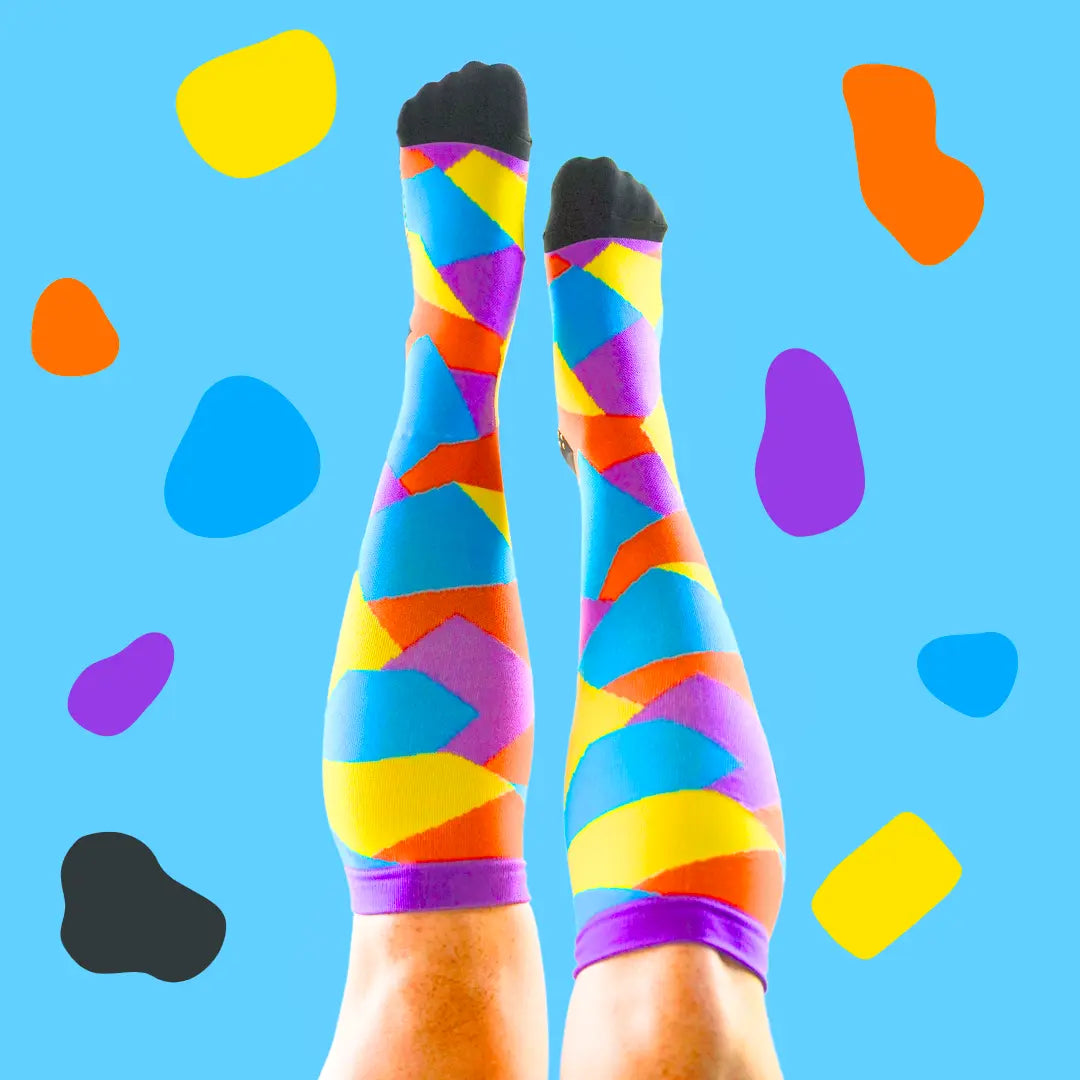


Yes, we can run with compression socks as they can improve running performance, reduce fatigue, and speed up recovery. The benefits of compression socks for running include improved circulation, reduced fatigue, enhanced recovery, reduced swelling, and eased shin and calf discomfort.
In practice, many runners report that compression socks make their legs feel lighter during runs, though they may feel warm in summer, making proper fit and compression level essential for comfort and effectiveness. For optimal use, compression socks can be worn before a run to warm up muscles, during a run for stability and to reduce fatigue, and after a run to enhance recovery. For recovery, wearing them for 2–4 hours is ideal, while long-distance races may benefit from up to 48 hours of use to maximize circulation, reduce soreness, and support muscle repair.
7 Benefits of Running With Compression Socks
Benefits of running with compression socks include improved circulation, reduced muscle fatigue, faster recovery, less swelling, shin splint support, calf pain relief, and fewer leg cramps. Graduated compression applies steady pressure to the lower legs, helping blood move back toward the heart and supporting working muscles during runs.
-
Improved Blood Flow and Oxygen Delivery to Your Muscles
Compression socks improve blood circulation by applying graduated pressure to the lower legs, pushing blood toward the heart and helping oxygen reach working muscles faster during runs. This targeted compression, provided by compression socks for DVT and circulation, supports venous return in the calf muscles and works with the natural muscle pump of the lower legs during each stride. By assisting this circulation cycle, compression socks help maintain a steady supply of oxygen-rich blood to active muscles. Improved circulation supports sustained muscle activity, delays early fatigue, and helps runners maintain more consistent endurance during longer running sessions.
-
Reduced Muscle Vibration and Fatigue
In reducing muscle vibration and fatigue during running, compression socks provide structural support to the calf muscles during repeated ground impact. Each foot strike creates small oscillations in the lower-leg muscles, which gradually increase muscle strain over time. Compression socks help stabilize these muscles and control excessive movement, allowing the legs to maintain better mechanical efficiency. This stabilization reduces cumulative muscle stress and helps runners feel less fatigue during prolonged training sessions.
-
Faster Post-Run Recovery
To support faster post-run recovery, compression socks promote steady circulation in the lower legs after running. Compression socks use graduated compression to apply controlled pressure around the ankle and calf, helping blood return to the heart efficiently as the body begins the recovery process. This circulation support helps remove metabolic waste, such as lactic acid, and reduces fluid buildup in the muscles. Thus, runners may experience less muscle soreness, reduced post-run fatigue, and a smoother recovery between recovery phases.
-
Less Swelling in the Legs and Ankles
While running, compression socks help reduce swelling in the legs and ankles by applying graduated pressure that supports healthy circulation in the lower limbs. This controlled compression around the ankle and calf helps move blood and excess fluid back through the veins rather than allowing them to pool in the lower legs. By improving fluid movement during sustained activity, compression socks help limit fluid buildup in the tissues. Runners may therefore experience less ankle swelling and improved leg comfort during long-distance runs.
-
Support for Shin Splints
Regarding shin splints during running, compression socks improve blood circulation, reduce swelling, stabilise lower-leg muscles, ease pain, and support faster recovery. Repetitive impact from running places continuous stress on the muscles and connective tissues attached to the shinbone, often leading to irritation along the tibia. Compression socks for shin splints apply graduated pressure around the calf and shin area, helping support surrounding muscles and limit excessive movement during each stride. This added stability reduces strain on the shin and helps runners maintain more controlled lower-leg movement.
-
Relief for Calf Pain During Running
While running, compression socks help relieve calf pain by supporting the calf muscles and improving circulation in the lower legs. The graduated pressure applied around the calf helps reduce muscle strain and supports better blood flow during repeated movement. This compression assists the calf muscles as they contract and relax with each stride, helping limit tightness and fatigue. With better muscle support and circulation, runners may experience reduced calf discomfort and maintain smoother movement during longer runs.
-
Help With Leg Cramps When Running
Compression socks help reduce the risk of leg cramps during running by supporting circulation and stabilizing the lower-leg muscles. The graduated pressure around the calf helps maintain steady blood flow and assists muscles as they repeatedly contract and relax with each stride. This controlled compression supports balanced muscle activity and reduces sudden tightening that often leads to cramps. With improved muscle support and circulation, runners may experience fewer cramping episodes and maintain smoother, more controlled leg movement throughout a run.
What Runners Say About Compression Socks?
Runners say compression socks make their legs feel lighter during runs, and proper fit and compression level matter for comfort. However, they may feel warm in summer. This feedback often relates to how compression supports muscle stability and circulation, which influences comfort and performance during a run.
-
Legs Feel Lighter During Runs
Many runners report that their legs feel lighter during runs when wearing compression socks, often due to reduced heaviness and fatigue in the lower legs. The gentle pressure around the calf supports circulation and muscle stability, helping the legs feel more supported with each stride. This effect may reduce the tired sensation that usually develops in the calves during longer runs. In runner experiences, this lighter-leg sensation often helps maintain smoother movement and more comfortable running over longer distances.
-
Fit and Compression Level Matter
Runners often mention that the fit and compression level of compression socks matter because the right pressure supports muscles without restricting movement. Socks that are too tight or have a compression level that is too high in mmHg may feel restrictive, cause discomfort, or interfere with natural leg movement during a run. On the other hand, socks that are too loose may not provide effective compression. Because of this, runners often stress the importance of choosing the correct size and appropriate compression sock level to ensure proper support, comfort, and benefit while running.
-
Can Feel Too Warm in Summer
Some runners say compression socks can feel too warm during summer runs because the snug compression fabric covers the lower legs and traps more heat than regular running socks. In runner feedback, this warmth becomes more noticeable during hot weather, long runs, or races held in higher temperatures. Although the compression supports circulation and muscle stability, the added layer around the calf may increase heat buildup, which is why many runners consider breathable fabrics or lighter compression socks for warm conditions.
When to Wear Compression Socks for Running
Compression socks can be worn before, during, and after a run. Wearing them before a run helps warm up the muscles and improve circulation, reducing early fatigue. During a run, they support muscle stability and limit vibration, though some runners may notice extra warmth over long distances. After a run, compression socks are most effective for recovery, as they enhance blood flow, help flush lactic acid, and speed up post-run muscle repair. Using them strategically around running ensures optimal support, performance, and quicker post-run recovery.
How Long Can You Wear Compression Socks?
Compression socks can be safely worn for 8–12 hours a day, or even throughout the day during recovery. Before a run, put them on 1–2 hours prior to help warm up the muscles and improve circulation. During the run, they can be worn for the entire duration to support muscle stability and reduce fatigue. After running, wearing them for 2–4 hours is ideal for recovery, though for long-distance races or intense sessions, keeping them on for up to 48 hours is also safe and can further aid muscle repair and reduce swelling.
How Do Compression Socks Help Runners?
Compression socks do not replace proper training, warm-ups, recovery, or injury management, but they may help runners manage lower-leg fatigue, swelling, calf tightness, and post-run soreness. During running and recovery, sports compression socks provide steady lower-leg pressure that may support circulation, reduce muscle vibration, and improve comfort during longer runs or recovery periods. The best results depend on choosing the right fit, compression level, fabric, and wear time for the type of run.