



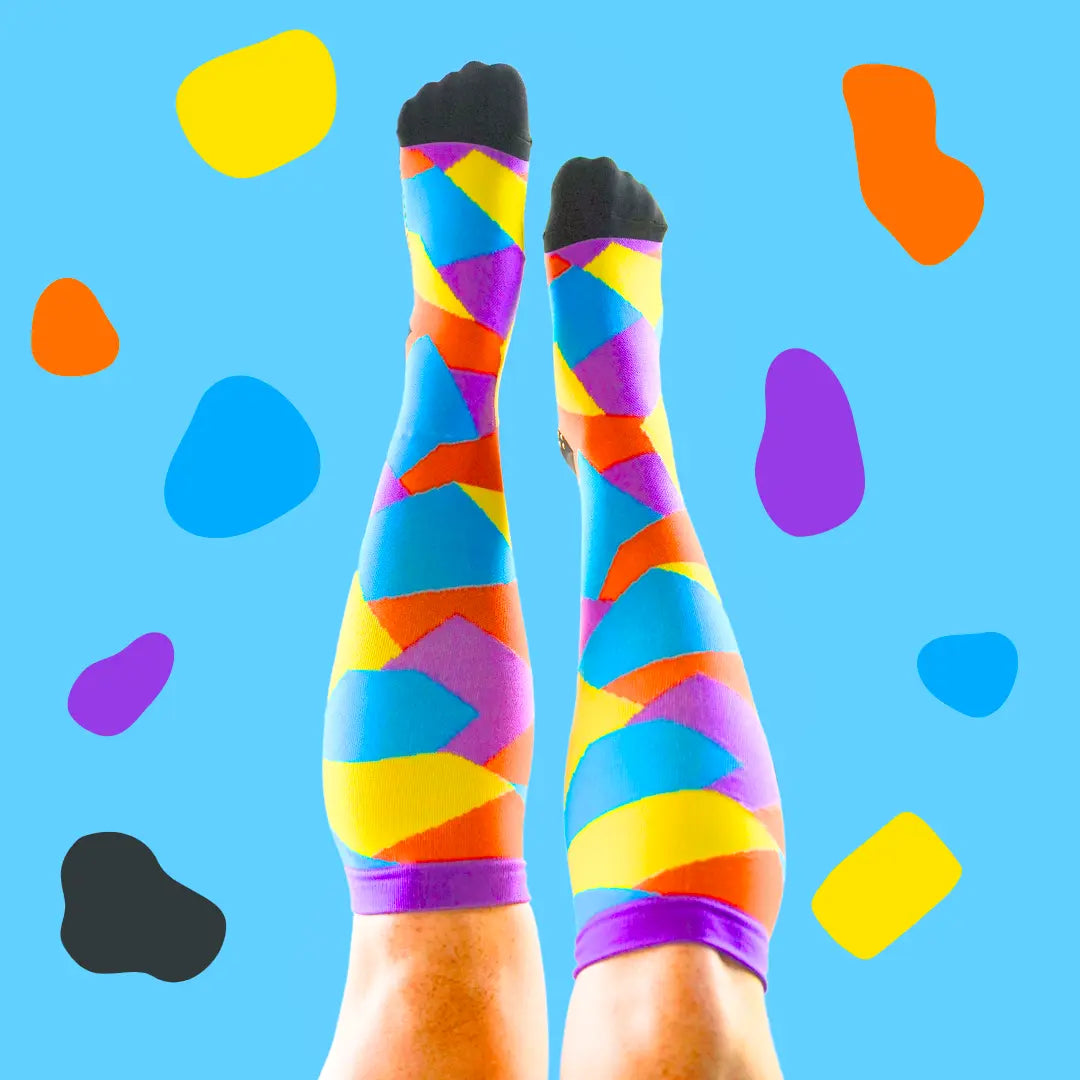


Yes, compression socks are beneficial for cellulitis recovery, but they should not be worn during an active cellulitis infection because applying pressure to infected, inflamed skin can worsen discomfort and interfere with healing. Once the infection has completely resolved, compression therapy helps control swelling, improve circulation, and reduce the risk of recurrent cellulitis by preventing fluid buildup in the legs.
After recovery, compression socks help reduce swelling, improve circulation, manage fluid buildup, relieve lingering discomfort, and lower the risk of complications. They work through graduated compression, which improves blood flow, promotes lymphatic drainage, distributes pressure evenly across the legs, and reduces pain from persistent swelling. Compression socks should be avoided if you have an active infection, severe arterial disease, open wounds or ulcers, or unexplained leg pain.
For the best results, choose compression socks with the right compression level, a proper fit, breathable, soft materials, and a comfortable design. Wear them during the day after cellulitis has healed and continue using them consistently if swelling or chronic edema persists to support recovery and help prevent future cellulitis episodes.
Should You Wear Compression Socks During Cellulitis?
No, you should not wear compression socks during active cellulitis because they can place pressure on infected, inflamed skin, potentially worsening pain, irritation, and the healing process. Remove compression garments until the infection has completely resolved and you have finished your prescribed antibiotics. During treatment, elevate the affected limb to reduce swelling and follow your doctor's instructions. After cellulitis has fully cleared, properly fitted compression socks can help manage chronic swelling and reduce the risk of future cellulitis episodes.
When Is It Safe to Start Wearing Compression Socks?
It is safe to start wearing compression socks only after the cellulitis has completely resolved, your prescribed course of antibiotics is finished, and your healthcare provider confirms that the infection is no longer active. Additionally, your skin should no longer be red, warm, or severely painful.
If swelling persists after recovery, properly fitted compression socks can help control edema, improve circulation, and reduce the risk of recurrent cellulitis, particularly in people with chronic leg swelling or lymphedema. For best results, wear compression socks in the morning before swelling develops and keep them on for 8 to 12 hours during the day. Choose the appropriate compression level, such as 15-20 mmHg for mild swelling or 20-30 mmHg for moderate to severe swelling, based on your needs.
How Do Compression Socks Help With Cellulitis?
Compression socks help after cellulitis has healed by reducing swelling, improving blood circulation, managing fluid buildup, relieving lingering discomfort, and lowering the risk of complications such as chronic edema and recurrent cellulitis. They work by applying gentle, graduated pressure that encourages healthy blood and lymphatic flow, making them particularly beneficial for people with chronic leg swelling after the infection has fully resolved.
Key benefits of compression socks for cellulitis are:
-
Reduce swelling
Compression socks help reduce swelling after cellulitis by applying graduated pressure that supports healthy blood flow and lymphatic drainage. This limits fluid buildup in the legs, making swelling easier to manage and improving overall comfort. Controlling edema also helps maintain healthier skin and lowers the risk of recurrent cellulitis. For effective results, wear properly fitted compression socks at 15-20 mmHg for mild swelling or 20-30 mmHg for moderate swelling.
- Improved Circulation
When cellulitis has healed, compression socks help improve circulation by applying graduated pressure that encourages blood to flow back toward the heart and reduces pooling in the legs. Better circulation delivers oxygen and nutrients to healing tissues, supports recovery, and helps reduce lingering swelling. It also lowers the risk of chronic venous problems and recurrent cellulitis. Wearing the correct compression level and ensuring a proper fit helps maximise these long-term benefits while keeping the legs healthy.
- Fluid Management
Proper fluid management plays an important role in recovery after cellulitis, and compression socks help by preventing excess fluid from collecting in the lower legs. Their graduated pressure promotes healthy blood circulation and lymphatic drainage, reducing persistent swelling and supporting healthier skin and tissues. By limiting fluid buildup, compression socks also help lower the risk of recurrent cellulitis, particularly in people with chronic leg edema.
- Reduce discomfort
Lingering pain and discomfort after cellulitis are often due to persistent swelling, and compression socks help relieve these symptoms by improving circulation and preventing fluid accumulation in the legs. The gentle, graduated pressure reduces feelings of heaviness, tightness, and fatigue while supporting the healing tissues. As a result, many people experience greater comfort during daily activities and a smoother recovery.
- Prevention of complications
Compression socks help prevent complications after cellulitis by controlling swelling, supporting skin integrity, and reducing the risk of recurrent infections. Research published in the New England Journal of Medicine found that compression therapy reduced cellulitis-related hospitalisations to 7%, compared with 14% among people who did not use it (hazard ratio, 0.38). By effectively managing chronic edema, compression socks support long-term leg health and help prevent future cellulitis complications.
How Do Compression Socks Work for Cellulitis?
Compression socks work for cellulitis recovery by promoting better blood flow, helping fluid drain, ensuring even fluid distribution, and alleviating pain caused by lingering swelling. These combined effects support healing after the infection has resolved, improve leg comfort, and help reduce the risk of recurrent cellulitis.
Compression socks work for cellulitis in the following ways:
-
Better Blood Flow
Compression socks improve blood flow during cellulitis recovery by applying graduated pressure that is firmest at the ankle and gradually decreases up the leg. This encourages veins to return blood to the heart more efficiently, reducing blood pooling in the lower legs. Better circulation delivers oxygen and nutrients to healing tissues, helps reduce lingering swelling, and supports healthier skin, lowering the risk of chronic edema and recurrent cellulitis.
- Helping Fluid Drain
A key mechanism behind compression socks for cellulitis recovery is their ability to improve fluid drainage through graduated pressure, which moves excess fluid upward via the lymphatic system rather than allowing it to pool in the lower legs. This helps control fluid accumulation, supports healthier tissues, and promotes a smoother recovery while reducing persistent swelling.
- Even Fluid Distribution
Compression socks promote even fluid distribution during cellulitis recovery by applying graduated pressure that gently spreads fluid across the leg rather than allowing it to collect in one area. This balanced pressure reduces localised swelling, relieves stress on the skin and underlying tissues, and supports healthier circulation. As a result, the affected leg heals more efficiently, and the risk of skin damage, chronic edema, and recurrent cellulitis is reduced.
- Alleviating Pain
By controlling swelling and improving circulation, compression socks help relieve pain that can persist after cellulitis. Less fluid buildup reduces pressure on inflamed tissues and nerve endings, easing discomfort and improving mobility. Improved blood flow also delivers oxygen and nutrients to healing tissues, supporting the healing process, making daily activities more comfortable, and reducing lingering leg fatigue.
When Should You Avoid Compression Socks?
You should avoid wearing compression socks if you have an active infection, severe arterial disease, open wounds or ulcers, or unexplained leg pain, as compression may worsen symptoms, restrict blood flow, delay healing, or increase the risk of complications. Using compression socks only when it is appropriate helps protect the affected tissues, supports safe recovery, and reduces the likelihood of further leg problems.
If you experience the following, avoid wearing compression socks:
- Active Infection: Compression socks should be removed immediately during an active cellulitis infection, as they can trap moisture against the skin, aggravate inflamed tissue, and potentially worsen bacterial spread.
- Severe Arterial Disease: People with severe arterial disease People with severe arterial disease, such as peripheral artery disease (PAD), coronary artery disease (CAD), and carotid artery disease, should not wear compression socks because the added pressure may further reduce blood flow to the legs, increasing the risk of tissue damage.
- Open Wounds or Ulcers: Compression socks should be avoided if there are open wounds or ulcers on the leg, since covering these areas can impair healing and make it harder to monitor for signs of infection or complications.
- Unexplained Leg Pain: If you experience new or unexplained leg pain, avoid using compression socks until a healthcare provider has assessed the cause, as compression could mask or worsen underlying problems.
What Should You Look for in Compression Socks for Cellulitis?
When choosing compression socks for cellulitis recovery, look for the right compression level, a proper fit, easy application, a comfortable length, breathable material, and a soft feel for sensitive skin. These features help provide effective compression, improve comfort during daily wear, support healthy circulation, reduce irritation, and promote long-term leg health after the infection has healed.
Key considerations to look for in compression socks for cellulitis are:
-
Right compression level
While choosing compression socks for cellulitis recovery, look for the right compression level, such as 15-20 mmHg for mild swelling after cellulitis or 20-30 mmHg for moderate swelling and chronic edema following cellulitis. The appropriate compression level helps improve circulation, control fluid buildup, reduce lingering swelling, and support long-term leg health while lowering the risk of recurrent cellulitis.
- Proper fit
For cellulitis recovery, look for compression socks with a proper fit, such as a size based on your ankle and calf measurements rather than your regular shoe size. A well-fitted sock provides even compression without causing pain, pinching, or deep marks on the skin. The correct fit helps control swelling, improve circulation, and protect sensitive skin while supporting recovery after cellulitis.
- Easy application
If you are experiencing pain, swelling, or reduced hand strength after cellulitis, look for compression socks that are easy to apply, such as those with stretchable fabric, zippered designs, or donning aids. These features reduce the effort required to put on and take off the socks, making daily compression therapy more comfortable and encouraging consistent use throughout recovery.
- Comfortable length
Consider knee-high compression socks for cellulitis recovery, as they provide comfortable coverage for the lower leg, where swelling commonly occurs. This length offers effective compression while remaining comfortable for daily wear. Choosing a comfortable sock length helps improve compliance with compression therapy and supports better management of swelling throughout recovery.
- Breathable material
Choose compression socks made from breathable materials for cellulitis recovery, such as Merino wool or bamboo, to help keep your feet and legs cool and dry throughout the day. By reducing heat, sweat, and moisture around the skin, breathable fabrics help minimize irritation and create a healthier environment for skin recovery after cellulitis.
- Soft feel for sensitive skin
If you have sensitive skin, choose compression socks with a soft feel, such as those made from bamboo or Merino wool, for cellulitis. These gentle fabrics reduce friction, pressure marks, and skin irritation while protecting healing tissues. A softer material also improves comfort during extended wear, making it easier to use compression socks consistently throughout cellulitis recovery.
What Are the Best Compression Socks for Cellulitis Recovery?
The best compression socks for cellulitis recovery include Sockwell Circulator Compression Socks, Bombas Performance Compression Socks, and VIM & VIGR Graduated Compression Socks. These compression socks provide graduated compression, comfortable materials, and supportive designs that help improve circulation, manage swelling, and promote greater comfort during recovery after cellulitis.
Below are the best compression socks for cellulitis recovery:
- Sockwell Circulator Compression Socks: Compression socks provide a gentle 15-20 mmHg of graduated compression to help reduce swelling and support lymphatic drainage after cellulitis. The blend of Merino wool and bamboo offers breathable, moisture-wicking comfort for sensitive skin.
- Bombas Performance Compression Socks: Designed for post-infection wear, these compression socks deliver targeted support with compression levels of 15-20 mmHg. Their moisture-wicking materials help keep legs dry, while the antimicrobial properties support skin health during recovery.
- VIM & VIGR Graduated Compression Socks: Available in both 15-20 mmHg (everyday) and 20-30 mmHg (firm) options, these compression socks use graduated compression to minimize edema and prevent fluid pooling. The wide range of designs and breathable fabrics makes them suitable for daily use during cellulitis recovery.
How Should You Wear Compression Socks for Cellulitis?
You should wear compression socks for cellulitis recovery only after the infection has healed, putting them on in the morning before swelling develops and wearing them throughout the day. Make sure they fit properly without rolling or bunching, and remove them before going to bed. Knowing how to put on compression socks correctly helps ensure a proper fit without rolling or bunching, improving circulation, controlling swelling, and reducing the risk of recurrent cellulitis. Remove them before going to bed unless your healthcare provider advises otherwise.
Follow the methods below to wear compression socks for cellulitis:
-
Wear them only after the cellulitis infection has completely healed.
-
Put them on in the morning before swelling develops.
-
Ensure they fit properly without rolling, bunching, or causing discomfort.
-
Wear them consistently for 8-12 hours during the day or as directed.
-
Remove them before going to bed unless otherwise instructed.
-
Wash them regularly and replace them when they lose elasticity to maintain effective compression.
How Long Should You Wear Compression Socks for Cellulitis?
You should wear compression socks for cellulitis recovery during the day, for 8 to 12 hours, and remove them before going to bed unless your healthcare provider advises otherwise. If you have persistent swelling, chronic edema, or lymphedema that increases the risk of recurrent cellulitis and wondering how long to wear compression socks, it is recommended to continue wearing them for as long as these conditions persist or as directed by your healthcare provider. Consistent daily use helps improve circulation, reduce swelling, and support long-term leg health.
How To Choose the Right Compression Socks for You?
To choose the right compression socks for cellulitis recovery, consider the compression level, proper fit, sock length, material, ease of application, and comfort for sensitive skin. Selecting compression socks with these features helps improve circulation, manage swelling, support healing after cellulitis, and reduce the risk of recurrent leg infections.
Key considerations for choosing the right compression socks include:
- Confirm with your doctor that compression socks are appropriate for your situation, especially if you have a history of cellulitis linked to chronic swelling or venous insufficiency.
- Avoid wearing compression socks during an active infection, as applying pressure to inflamed or infected skin may worsen discomfort or delay healing.
- Use 15-20 mmHg for mild swelling or prevention, and 20-30 mmHg for chronic or more severe swelling as advised by your healthcare provider.
- Choose knee-high compression socks, as this length provides support to the lower leg, where swelling and cellulitis often occur.
- Measure your calf and ankle accurately to ensure a proper fit, which helps maintain effective compression and reduces the risk of skin irritation or impaired circulation.