



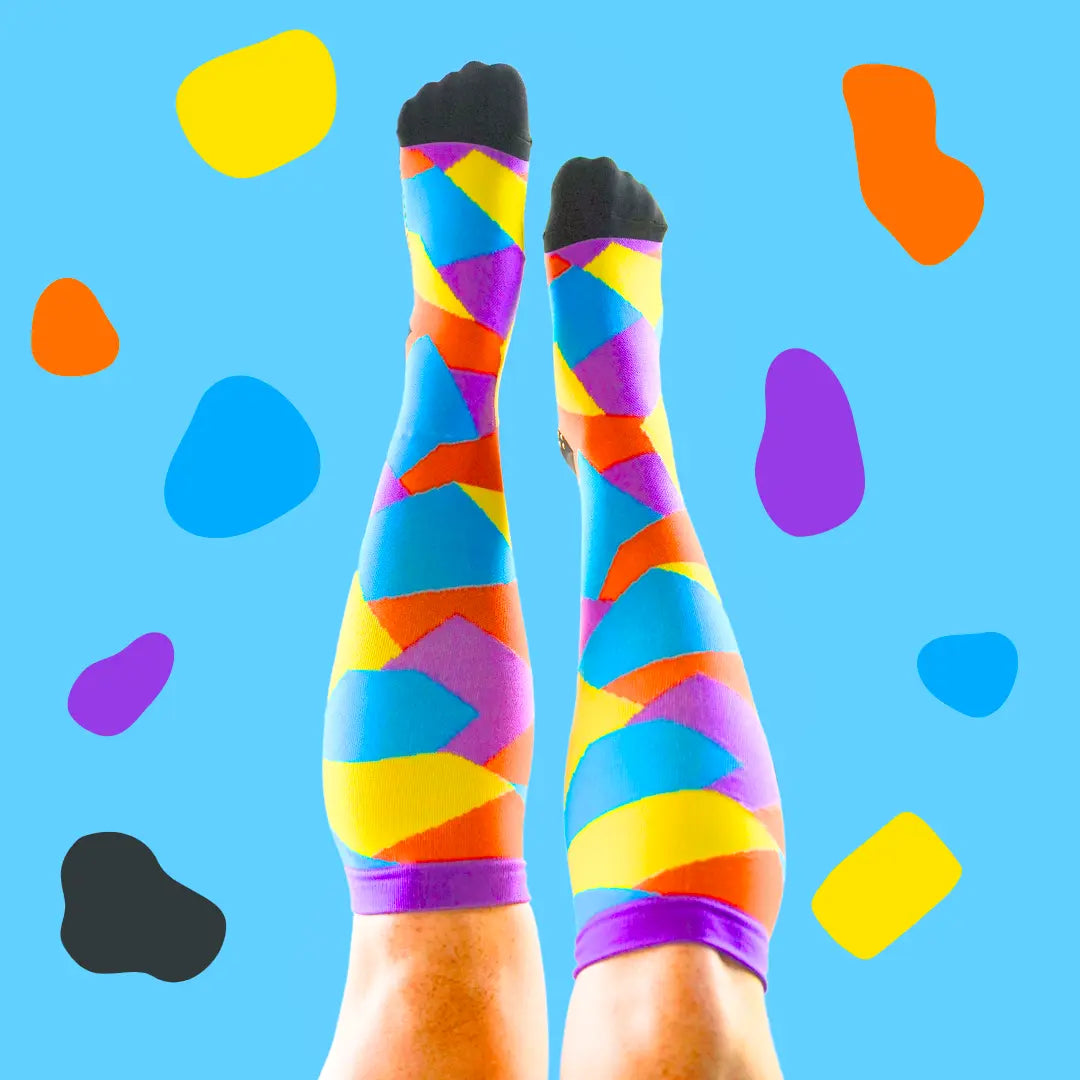


Compression socks can effectively relieve foot pain by improving blood circulation, reducing swelling, supporting tired feet, and easing pressure caused by prolonged standing. They are particularly beneficial for conditions such as plantar fasciitis, ball of foot pain, top of foot pain, and certain types of foot nerve pain when the correct compression level, sock length, and supportive features are selected. Choosing graduated compression, arch support, cushioned soles, seamless toes, breathable fabrics, moisture control, and inclusive sizing helps maximise comfort while providing targeted support for everyday activities.
To achieve the best results, wear compression socks in the morning, apply them correctly, and remove them before sleeping unless advised by a healthcare professional. It is equally important to recognise warning signs such as numbness, tingling, increased pain, skin discolouration, cold toes, or restricted blood flow, which require immediate removal. People with circulation disorders or other underlying medical conditions should seek professional guidance before use.
Are Compression Socks Good for Foot Pain?
Yes, compression socks help relieve foot pain by improving blood circulation, reducing swelling, supporting tired feet, minimising pressure from prolonged standing, and providing a snug, supportive fit that enhances overall foot comfort. They are particularly beneficial for people who spend long hours on their feet or experience foot discomfort caused by mild swelling, overuse, or plantar fasciitis.
5 key reasons compression socks are good for foot pain are:
- Improve blood circulation
Compression socks help relieve foot pain by improving blood circulation through graduated pressure, with the highest compression at the ankle that gradually decreases up the leg. This pressure helps push blood back toward the heart, prevents blood and fluid from pooling in the feet, reduces swelling and inflammation, and improves oxygen delivery to foot tissues, which can ease pain and fatigue.
A 2025 study published in PMC found that wearing compression socks produced significantly lower brachial-ankle pulse wave velocity compared to wearing normal socks or no socks at all, indicating measurable improvements in arterial compliance and venous return (Morinaga et al., 2025). For the best results, wear them in the morning before swelling develops and remove them before sleeping. 15–20 mmHg compression is suitable for daily wear, while 8–15 mmHg is a better option for people who are sensitive to pressure.
- Reduce swelling
When foot pain is caused by swelling, compression socks help reduce it by preventing excess fluid from accumulating in the feet and ankles. Their graduated pressure encourages healthy blood flow and limits fluid accumulation, reducing puffiness, heaviness, and the aching sensation that commonly develops after prolonged standing, walking, or physical activity.
Research involving healthy young women showed that wearing compression stockings for just 30 minutes significantly reduced calf circumference and extracellular fluid volume, indicating a measurable reduction in lower leg swelling (Sughara et al., 2018). A separate study comparing compression intensities found that both class I (18–21 mmHg) and class II (23–32 mmHg) stockings were effective in reducing lower leg swelling during prolonged standing, with class I stockings also reporting greater comfort (Rantonen et al., 2018). This benefit is especially valuable for people with oedema, as well as those who regularly experience swollen feet and ankles after spending long hours standing or sitting.
- Support tired feet
After long hours of standing or walking, compression socks help support tired feet by providing gentle, consistent pressure that keeps the foot muscles and ligaments better supported. This added stability reduces muscle fatigue, limits strain on the soft tissues, and helps maintain proper foot alignment during daily movement.
A study examining 40 male security guards working 12-hour standing shifts found significant evidence of lower-leg long-lasting muscle fatigue, oedema, and discomfort in those wearing regular socks, while guards wearing 15–20 or 20–30 mmHg compression stockings showed measurable reductions in all three outcomes (Garcia et al., 2023). With better muscle support and reduced strain, compression socks help keep feet feeling energised and comfortable during prolonged daily activities.
- Reduce pressure from standing for long periods
Compression socks help relieve foot pain caused by prolonged standing by applying graduated compression that distributes pressure more evenly across the feet and lower legs while supporting the muscles and soft tissues. Even weight distribution reduces stress on the heels, arches, and forefoot, helping delay the onset of soreness and discomfort during extended periods of standing.
A crossover clinical trial involving workers who stood for more than 8 hours daily found that compression therapy was among the most effective interventions for reducing leg edema and pain associated with prolonged standing, with medical compression stockings consistently outperforming rest alone (Kim, Won, & Ko, 2022). By reducing the strain placed on the feet during prolonged standing, compression socks also help users stay active and productive with greater comfort.
- Provide a snug and supportive fit
For people experiencing foot pain from poor foot support or excessive movement, compression socks provide a snug, supportive fit that keeps the feet and ankles secure throughout the day. This close fit promotes proper foot alignment, limits unnecessary movement, and reduces strain on the muscles, ligaments, and joints.
A 2021 study published in BMC Sports Science, Medicine and Rehabilitation found that compression socks enhanced cutaneous sensory feedback at the foot, improving proprioception, postural stability, and reflex control during walking (Sun et al., 2021). A secure fit also minimises friction inside shoes, helping prevent blisters, skin irritation, and discomfort caused by repeated rubbing, while providing consistent support for everyday activities.
Which Types of Foot Pain Can Compression Socks Help?
Compression socks can help relieve ball of foot pain, top of foot pain, foot nerve pain, and plantar fasciitis pain by improving circulation, reducing swelling, and providing targeted support to the feet. While they are not a cure for the underlying condition, they can reduce discomfort, improve daily mobility, and make standing or walking more comfortable when used alongside appropriate treatment.
Can Compression Socks Help Ball of Foot Pain?
Yes, compression socks can help relieve ball of foot pain, including metatarsalgia and Morton's neuroma, by improving blood circulation, reducing swelling in the forefoot, and providing gentle arch support. Although they do not correct underlying structural problems, they can help control inflammation, reduce pressure on the forefoot, and minimise foot fatigue, making daily walking and standing more comfortable.
For better relief, choose compression socks with targeted metatarsal padding or footless compression sleeves if the forefoot is particularly sensitive. A 15–20 mmHg compression level is generally recommended for moderate support. Combining compression socks with wide-toe shoes and metatarsal pads can further reduce pressure on the ball of the foot and improve overall comfort.
Can Compression Socks Help Top of Foot Pain?
Yes, compression socks can help relieve top of foot pain by reducing swelling, improving blood circulation, and providing gentle support that stabilises the arch and ankle. They are particularly helpful for conditions such as extensor tendonitis, bunions, and general foot oedema, where inflammation and fluid buildup contribute to discomfort. While compression socks help manage symptoms, they do not treat the underlying cause of the pain.
When pain is limited to the top of the foot, ankle, and foot, compression sleeves offer more localised support than full-length compression socks. Their focused design helps reduce discomfort, improve stability, and increase comfort during prolonged standing or walking.
Can Compression Socks Help Foot Nerve Pain?
Yes, compression socks can help manage foot nerve pain (peripheral neuropathy) by improving blood circulation, increasing oxygen delivery to the tissues, and reducing swelling that may place pressure on irritated nerves. Although they can help relieve symptoms such as aching, burning, or tingling, they do not treat the underlying cause of nerve damage.
For safe and effective use, choose 15–20 mmHg compression with non-binding tops, breathable fabrics such as nylon, polyester, or bamboo blends, and seamless construction to reduce irritation. Compression socks should fit properly, as socks that are too tight or worn for extended periods can worsen discomfort rather than relieve it.
Can Compression Socks Help Plantar Fasciitis Pain?
Yes, compression socks can help relieve plantar fasciitis pain by improving blood circulation, stabilizing the arch, and preventing fluid buildup in the feet. They act as a light external "hug" for your foot, helping distribute pressure more evenly across the sole while reducing strain on the plantar fascia. This gentle support can ease heel discomfort and improve comfort during walking, standing, and other daily activities.
By choosing compression socks with ribbed compression zones and extra cushioning around the arch and heel, you can enhance foot support and improve comfort. Pairing them with plantar fascia stretches, supportive footwear, and orthotic inserts further reduces strain on the plantar fascia and promotes long-term symptom relief.
How Effective Are Compression Socks for Foot Pain?
Compression socks are highly effective for foot pain caused by swelling, poor circulation, plantar fasciitis, and everyday foot fatigue. They work by applying graduated pressure, with the highest compression at the ankle that gradually decreases up the leg, improving blood circulation, reducing inflammation, and preventing excess fluid from pooling in the feet and ankles.
For plantar fasciitis, 20–30 mmHg compression provides greater arch and heel support, while 15–20 mmHg is suitable for general foot fatigue and mild swelling. To maximise their benefits, wear compression socks in the morning before swelling develops. Avoid wearing them continuously for 24 hours unless advised by a healthcare professional.
When May Compression Socks Not Help Foot Pain?
Compression socks may not help and can even worsen foot pain caused by structural conditions such as bunions, flat feet, arthritis, Morton's neuroma, stress fractures, sprains, or poor blood flow from severe peripheral artery disease (PAD). They may also be unsuitable for people with open wounds or active skin infections, as compression can further restrict blood flow or irritate damaged tissues. An incorrect fit or prolonged use also increases discomfort, so anyone with these conditions should consult a healthcare provider before using compression socks.
How Do You Choose the Best Compression Socks for Foot Pain?
Choose the best compression socks for foot pain by selecting the right compression level, sock length, fit, and supportive features based on the cause and severity of your symptoms. Graduated compression, arch support, cushioning, breathable materials, and proper sizing can improve comfort, reduce swelling, and provide targeted relief for different types of foot pain.
What Compression Level Is Best for Foot Pain?
The best compression level for foot pain depends on its severity, with light compression for everyday comfort, moderate compression for mild to moderate pain and swelling, and firm compression for targeted relief of more persistent foot conditions. Selecting the appropriate compression level helps improve blood circulation, reduce swelling, and provide the right amount of support for different foot conditions and daily activities.
Below are the compression levels best for foot pain:
-
Light compression
Light compression (8–15 mmHg) provides gentle pressure that improves comfort without feeling restrictive, making it an ideal choice for everyday wear, mild foot fatigue, minor swelling, or sensitive feet. It is especially suitable for people who are new to compression socks or who experience only occasional foot discomfort. By promoting healthy circulation and providing light support, this compression level helps reduce tired, achy feet while remaining comfortable for extended daily use.
-
Moderate compression
Individuals experiencing mild to moderate foot pain can benefit from moderate compression (15–20 mmHg), which provides balanced pressure for daily wear, prolonged standing, walking, and minor swelling. It improves blood circulation, helps reduce fluid buildup, and provides consistent support to relieve discomfort caused by extended time on your feet. This compression level is ideal for workers, travellers, and active individuals seeking reliable everyday comfort and better foot support without feeling overly restrictive.
-
Firm compression
When foot pain is caused by plantar fasciitis, Achilles tendonitis, or significant swelling, firm compression (20–30 mmHg) can provide effective relief by providing greater support. Enhanced blood circulation, improved arch stabilisation, and reduced fluid buildup help relieve pain and inflammation while making standing and walking more comfortable. Foot-only compression sleeves are also available for targeted arch and heel support. People with circulatory disorders should consult a healthcare professional before using firm compression socks, especially if they plan to wear them overnight.
What Length of Compression Sock Is Best for Foot Pain?
Choose ankle-length compression socks for localized foot pain, while crew-length compression socks are better when pain extends to the ankle or lower calf, whereas knee-high compression socks are best for foot pain caused by swelling, poor circulation, or venous conditions. The ideal compression sock length for foot pain depends on where the pain occurs and its underlying cause.
3 types of compression sock lengths best for foot pain are:
- Ankle-length compression socks
For localised foot pain in the arches, heels, or ankles, ankle-length compression socks help relieve discomfort by providing targeted compression without covering the calf. They improve blood circulation, reduce swelling, and provide gentle support where it is needed most. This style is especially beneficial for people with plantar fasciitis, arch strain, or heel discomfort who need focused relief while maintaining greater comfort and flexibility.
- Crew-length compression socks
When foot pain extends beyond the foot to the ankle, crew-length compression socks provide balanced support by covering the foot, ankle, and lower calf. Extended coverage helps maintain proper arch alignment, supports the lower Achilles tendon, and reduces strain on the ankle during movement. Crew-length compression socks are ideal for people who need additional support during prolonged standing, walking, or physical activity.
- Knee-high compression socks
People with foot pain caused by swelling or poor circulation can benefit from knee-high compression socks, which provide graduated compression from the foot to just below the knee. Graduated pressure helps move blood back toward the heart, reducing fluid buildup, swelling, and pressure in the feet and ankles. Knee-high compression socks are well suited for people who stand for long hours, travel frequently, or have venous circulation problems that contribute to foot discomfort.
What Features Should Compression Socks for Foot Pain Have?

Compression socks for foot pain should include features such as graduated compression, a cushioned sole, arch support, a seamless toe, breathable fabric, moisture control, and inclusive sizing to maximise comfort, support, and pain relief. Together, these components help improve circulation, reduce pressure and friction, keep feet dry, and ensure a comfortable fit for different foot shapes and daily activities.
7 key features of compression socks for foot pain are:
- Graduated compression
Graduated compression is one of the most important features to look for in compression socks for foot pain because it applies the highest pressure at the ankle and gradually decreases toward the calf. This pressure gradient improves blood circulation, helps move blood back toward the heart, and reduces fluid buildup in the feet and ankles. Unlike uniform compression, which applies equal pressure throughout the sock, graduated compression provides targeted support where it is needed most, making it more effective for reducing swelling and relieving foot pain.
- Cushioned sole
For foot pain caused by prolonged standing, walking, or high-impact activities, a cushioned sole is an important feature in compression socks as it provides extra padding under the heel and ball of the foot. The added cushioning absorbs impact with every step, reducing pressure on weight-bearing areas and improving overall comfort. Cushioned soles help minimise foot fatigue and make daily activities more comfortable for people who spend extended periods on their feet.
- Arch support
Compression socks for foot pain must have targeted arch support, as it helps stabilise the plantar fascia, reduce heel pain, and improve overall foot alignment. Gentle compression around the arch helps minimise inflammation, relieve strain on the plantar fascia, and provide added stability during movement. Arch support is especially beneficial for people with plantar fasciitis, flat feet, or arch strain, making standing and walking more comfortable.
- Seamless toe
Choosing compression socks with a seamless toe can improve comfort for people with foot pain by minimising friction and pressure around the toes. The nearly flat or seam-free construction helps reduce skin irritation, prevent blisters, and eliminate rubbing that can worsen discomfort during prolonged wear. A seamless toe helps maintain consistent comfort throughout the day, making compression socks easier to wear during prolonged standing, walking, or other daily activities.
- Breathable fabric
For foot pain relief, compression socks should be made from breathable fabrics such as moisture-wicking nylon/spandex blends, bamboo, or merino wool to promote airflow and keep feet dry. These materials help reduce sweat, keep feet cool, and lower the risk of fungal infections during prolonged wear. Breathable fabrics also improve overall comfort for everyday use, while ankle-sleeve styles are an excellent option for people who want targeted compression that fits comfortably inside regular shoes.
- Moisture control
Compression socks made from breathable, antimicrobial blends provide added protection by keeping feet fresh, supporting foot health, and improving comfort during daily wear, exercise, or extended periods of standing. When choosing compression socks for foot pain, look for moisture-wicking properties to help keep your feet dry throughout the day. Effective moisture management helps prevent blisters, reduce odour, and minimise skin irritation caused by prolonged exposure to moisture.
- Inclusive sizing
When choosing compression socks for foot pain, inclusive sizing helps ensure proper pain relief by providing a precise fit for different foot sizes, calf circumferences, and leg shapes. A proper fit delivers consistent compression without feeling too tight or too loose, helping maximise comfort and reduce discomfort. For the best fit, measure your ankle and calf circumference rather than relying solely on shoe size, as accurate measurements help ensure the correct level of compression and support.
How Should You Wear Compression Socks for Foot Pain?
You should wear compression socks by pulling them on gently from the toes and gradually rolling them up over your foot and calf. Make sure they fit snugly without wrinkles or folds, as an even fit helps provide consistent compression and prevents pressure points. Put them on in the morning before swelling develops, and wear them throughout the day while standing, walking, or sitting for extended periods. Remove them before going to bed unless your healthcare provider recommends overnight use.
How Do You Put On Compression Socks Correctly?
To put on compression socks correctly, turn the sock inside out to the heel, slide your foot in, position your heel properly, and gradually unroll the fabric up your leg while smoothing out any wrinkles. Put them on first thing in the morning before swelling begins, as this helps achieve even compression, improves comfort, and provides more effective relief from foot pain.
Follow these step-by-step instructions:
-
Make sure your legs are completely dry. If you use lotion or moisturizer, allow it to absorb fully before putting on the socks.
-
Turn the sock inside out until you reach the heel pocket.
-
Slide your toes and foot into the sock, then align the heel pocket directly over your heel.
-
Gradually unroll the sock up your ankle and calf in small sections, using rubber gloves if needed for a better grip.
-
Smooth out all wrinkles and bunching to ensure even compression.
-
Position the top band about two finger-widths below the crease of your knee if wearing knee-high socks.
-
Do not fold or roll the top band, as this can restrict blood flow and reduce the effectiveness of the compression.
How Long Should You Wear Compression Socks for Foot Pain?
To relieve foot pain effectively, wear compression socks for 8 to 12 hours a day, putting them on in the morning before swelling develops and removing them before going to bed. This wear schedule provides consistent support throughout the day while allowing your skin to breathe and your circulation to return to normal overnight.
Below are the wear times for compression socks for foot pain:
-
Prolonged standing or sitting: Put the socks on before your shift or activity and remove them once you return home.
-
Exercise and muscle recovery: Wear compression socks during your workout and keep them on for 2 to 3 hours afterwards to help reduce post-exercise swelling and muscle soreness.
-
Travel: Wear them throughout your flight or road trip and continue wearing them for 2 to 3 hours after arriving to help counter the effects of prolonged sitting and support healthy circulation.
Can You Wear Compression Socks for Foot Pain Overnight?
No, wearing compression socks overnight is generally not recommended because your body is in a resting position, and prolonged compression without movement may cause discomfort, overheating, or uneven pressure if the socks shift during sleep. Although they may provide temporary relief from foot pain, most people should remove them before bed unless a healthcare professional specifically advises overnight use.
Compression socks are most effective during the day because gravity causes fluids to collect in the feet and legs while you are standing or sitting. When you lie down, your legs are level with your heart, making overnight compression unnecessary for most people. Wear compression socks during your waking hours and only sleep in them if a healthcare professional specifically recommends overnight use.
When Is It Safe to Wear Compression Socks to Bed?
Overnight wear is considered safe and medically recommended only in specific situations, such as post-surgical recovery to help prevent deep vein thrombosis (DVT), active treatment of venous stasis ulcers, or the management of severe lymphedema. Outside of these medical conditions, wearing compression socks to bed is generally not recommended unless a healthcare professional specifically advises overnight use. Remove the socks immediately if you experience numbness, tingling, increased pain, skin discolouration, or skin irritation, and seek medical advice if these symptoms persist. Remove the socks immediately if you experience numbness, tingling, increased pain, skin discolouration, or irritation, and seek medical advice if these symptoms persist.
What Signs Mean You Should Remove Compression Socks?
Remove compression socks immediately if you experience warning signs such as numbness, tingling, increased pain, skin discolouration, cold toes, or signs of restricted blood flow, as these may indicate that the socks are too tight or not fitting properly. Addressing these warning signs promptly can help prevent circulation problems, skin damage, and worsening foot pain.
6 key signs you should remove compression socks are:
- Numbness
Do not continue wearing compression socks if you lose sensation in your feet or toes. Numbness is a warning sign that blood flow may be restricted, which can reduce oxygen delivery to the tissues and increase the risk of tissue damage if left untreated. Remove the socks immediately and make sure the size and compression level are appropriate before wearing them again.
- Tingling
Take a pins-and-needles sensation seriously while wearing compression socks. Tingling may indicate that the socks are placing excessive pressure on nearby nerves or limiting healthy circulation. Remove the socks immediately if tingling develops, and avoid wearing them again until the fit has been checked.
- Increased pain
Stop wearing compression socks if your foot or calf pain becomes worse after putting them on. Increased pain may indicate that the socks are too tight, incorrectly fitted, or restricting normal circulation instead of supporting it. Remove the socks immediately and reassess the fit or compression level before continued use.
- Skin discolouration
Check your feet and legs for unusual skin colour changes while wearing compression socks. Pale, bluish, red, or darkened skin may indicate restricted blood flow or skin irritation that requires immediate attention. Remove the socks as soon as you notice any discolouration and seek medical advice if the colour does not return to normal.
- Cold toes
Pay attention if your toes become persistently cold while wearing compression socks. Although compression applies supportive pressure, socks that are too tight or poorly fitted may reduce warmth by limiting circulation to the toes. Remove the socks if the coldness continues and consult a healthcare professional if the problem persists despite wearing the correct size.
- Restricted blood flow
Compression socks that are too tight or improperly fitted can impede circulation, leading to symptoms such as numbness, tingling, increased pain, cold toes, or skin discolouration. Stop wearing the socks immediately if these symptoms occur, and seek professional advice to determine the correct fit and compression level before using them again.
What Should You Look for in Compression Socks for Everyday Foot Comfort?
Choose compression socks made with soft, breathable bamboo fabric, inclusive sizing for different foot shapes, original Australian artwork designs, and ethically made, sustainable materials. Together, these qualities provide lasting comfort, a better fit, enhanced breathability, and a more sustainable option for everyday wear.
Below are the 4 factors you should look for in compression socks for everyday foot comfort:
- Soft, breathable bamboo fabric
For everyday foot comfort, choose compression socks made from soft, breathable bamboo fabric, as it naturally regulates temperature, wicks away moisture, and feels gentle against the skin. Bamboo helps keep feet dry, cool, and comfortable throughout the day while reducing odour and minimising skin irritation. Its hypoallergenic properties make it an excellent choice for people with sensitive skin or those who wear compression socks for extended periods.
- Inclusive sizing for different foot shapes
Ensure your compression socks are available in inclusive sizing to achieve effective foot pain relief and a secure fit. Select a size that accommodates your foot shape, calf circumference, and leg size to maintain consistent compression without slipping or excessive tightness. Measure your ankle and calf circumference instead of relying only on shoe size for the most accurate fit.
- Original Australian artwork designs
Choose compression socks with original Australian artwork if you want supportive footwear that also reflects your personal style. Unique designs do not change the level of compression, but they make the socks more enjoyable to wear and encourage consistent daily use for foot pain management.
- Ethically made, sustainable materials
Select compression socks for foot pain made from sustainable materials such as bamboo to enjoy lasting comfort while supporting environmentally responsible manufacturing. Bamboo provides natural softness, breathability, moisture control, and durability while reducing environmental impact. Ethical manufacturing also promotes fair labour practices and high-quality construction, making these socks a reliable choice for everyday wear.
Where to Buy Compression Socks for Foot Pain?
You can buy compression socks for foot pain from local pharmacies, specialty footwear stores, medical supply centres, sporting goods retailers, and trusted online stores that offer a variety of compression levels, sizes, and styles. Choosing a reputable compression socks retailer makes it easier to find the right fit, targeted support, and appropriate compression level for foot pain and conditions such as swelling, plantar fasciitis, and everyday foot fatigue.