



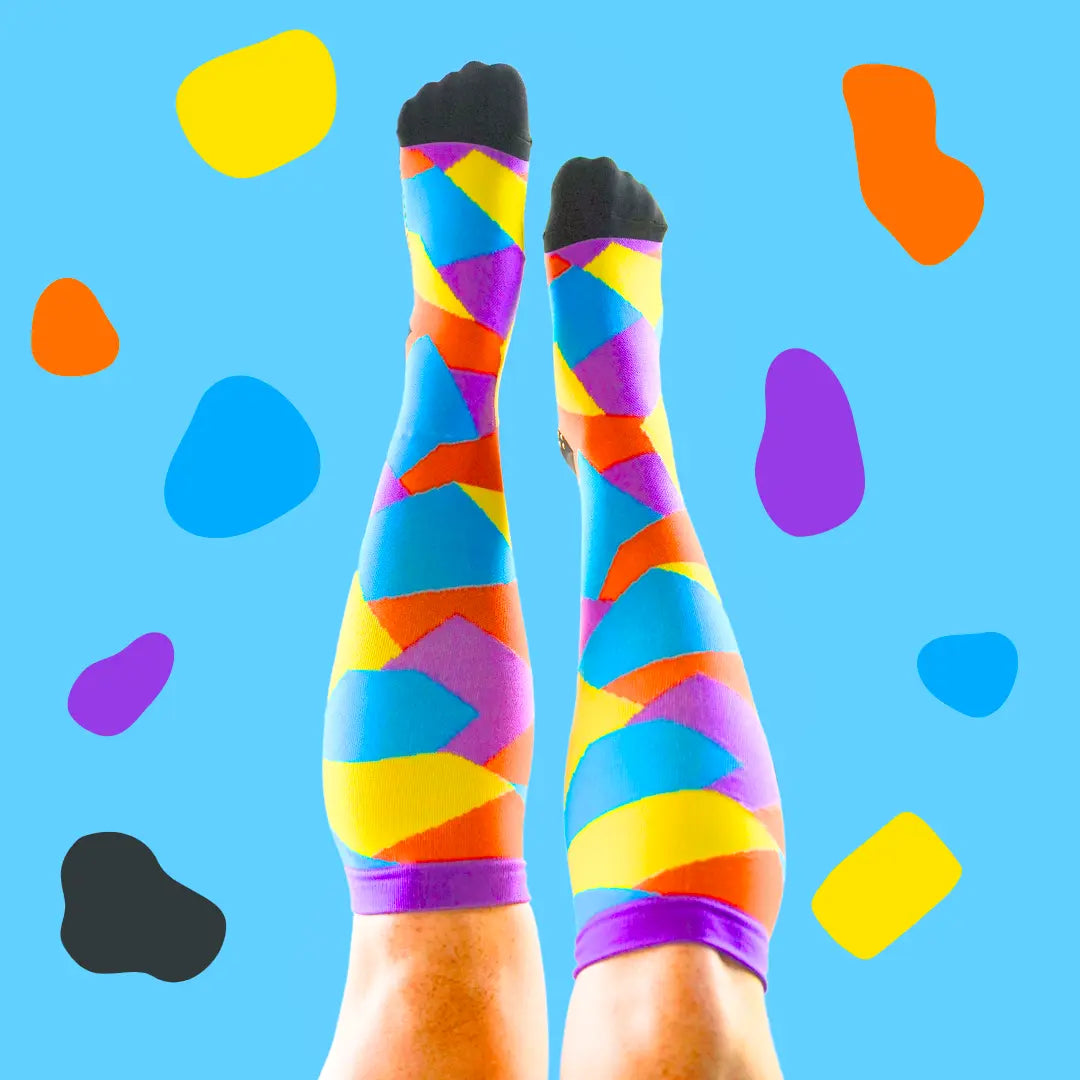


Yes,  compression socks help manage sciatica-related leg discomfort by applying graduated pressure that supports lower-leg circulation, reduces fluid build-up, and improves comfort during sitting, standing, or movement. While they do not treat sciatic nerve compression or directly relieve nerve pain, they can help manage associated symptoms such as swelling, heaviness, and fatigue. Sciatica can cause radiating leg pain, tingling, numbness, discomfort during sitting or standing, and reduced comfort during movement. For related lower-leg concerns, compression socks support circulation, manage swelling, provide gentle compression, and improve comfort during everyday activities.
Individuals with sciatica-related leg discomfort may use compression socks during prolonged sitting, standing, walking, or periods of reduced movement. To support comfortable use, choose the right compression level, proper fit, comfortable length, breathable material, secure top band, and easy application. Compression levels range from light (8-15 mmHg or 15-20 mmHg) to moderate (20-30 mmHg) and stronger medical compression (30+ mmHg), with higher levels requiring professional guidance based on individual needs.
How Do Compression Socks Work for Sciatica?
Compression socks for sciatica work by applying graduated pressure that supports blood flow back up the legs, helps reduce fluid build-up, and provides consistent lower-leg compression. This compression affects venous circulation in the lower legs, whereas sciatica originates from irritation or compression of the sciatic nerve or its nerve roots. Improved circulation helps manage swelling, leg heaviness, and discomfort that occur alongside sciatic nerve-related symptoms, but compression socks do not directly treat the underlying cause of sciatica.
The key ways compression socks work for sciatica are:
- Apply graduated pressure
Compression socks apply the strongest pressure near the ankle and gradually reduce compression higher up the leg. This graduated pressure supports venous return, helps maintain lower-leg circulation, and limits fluid build-up. By helping veins move blood upward more efficiently, compression may reduce leg heaviness, swelling, and discomfort during prolonged sitting, standing, or periods of limited movement.
- Support blood flow back up the legs
People with sciatica-related leg discomfort benefit from compression socks that support blood flow by helping move blood upward from the lower legs toward the heart. This pressure can limit blood pooling and fluid build-up, which may reduce lower-leg swelling, heaviness, and tiredness. The support can be particularly useful during prolonged sitting or standing, when reduced leg movement may slow venous return. While these effects can improve lower-leg comfort, compression socks do not relieve the nerve irritation or compression that causes sciatica.
- Help reduce fluid build-up
Individuals with sciatica-related leg discomfort can benefit from compression socks that apply controlled pressure to reduce lower-leg swelling and fluid build-up. This may reduce swelling, heaviness, and discomfort, particularly during prolonged sitting, standing, or reduced mobility. Swelling is not a typical neurological symptom of sciatica, so unexplained swelling in one leg should not automatically be attributed to sciatica and may require medical assessment.
- Provide consistent lower-leg compression
Compression socks provide consistent lower-leg compression for individuals with sciatica-related leg discomfort by delivering steady external pressure during sitting, standing, or movement. This continuous compression supports the lower leg by promoting circulation, assisting vein function, and helping control fluid retention. The supportive pressure helps reduce feelings of heaviness, swelling, and discomfort during daily activities that require prolonged positions or limited mobility.
Can Compression Socks Relieve Sciatic Nerve Pain?
No, Compression socks do not directly relieve sciatic nerve compression or nerve pain, although they may improve separate lower-leg swelling or heaviness where these coexist. They apply gentle, consistent pressure that supports blood flow from the feet and calves toward the heart and helps limit fluid build-up. This compression may improve lower-leg comfort during prolonged sitting, standing, or reduced movement, but it does not treat neurological symptoms such as tingling or numbness caused by sciatica.
What Problems Can Sciatica Cause in Your Legs?
Sciatica can cause leg problems such as radiating pain, tingling or numbness, leg heaviness, fatigue, and discomfort while sitting, standing, or moving. These symptoms occur when irritation or compression of the sciatic nerve affects sensation, movement, and comfort in the lower body.
5 problems sciatica can cause in your legs are:
- Radiating leg pain: Sciatica causes pain that travels from the lower back or buttock down the leg along the sciatic nerve pathway. This radiating pain can feel like a shooting, burning, or sharp sensation caused by sciatic nerve irritation or compression.
- Tingling or numbness: Altered sensations, such as tingling or numbness in the leg or foot, can occur when sciatica affects nerve signalling. These symptoms develop when irritation or compression changes how nerves transmit sensory information.
- Leg Weakness: Sciatica can cause weakness in the affected leg when irritation or compression of the sciatic nerve or nerve roots affects nerve function. Symptoms radiate from the buttock down the back of the leg, past the knee, and into the foot, and affect walking or standing and occur with pain, tingling, or numbness.
- Discomfort while sitting or standing: Prolonged sitting or standing can increase discomfort for some individuals with sciatica. Certain positions place additional stress on the lower back and irritated nerve areas, making symptoms more noticeable.
- Reduced comfort during movement: Sciatica can cause radiating pain and leg weakness that interfere with walking, standing, or changing position. Pain may also worsen with movements such as bending or twisting, making routine movement more difficult.
How Compression Socks Help With Sciatica-Related Leg Discomfort?

Compression socks help with sciatica-related leg discomfort by supporting lower-leg circulation, managing swelling, reducing heaviness, and providing consistent lower-leg support. These benefits apply to coexisting circulation-related swelling or heaviness, not to the sciatic nerve compression or irritation causing sciatica. Graduated compression supports venous return and limits fluid build-up, which may improve lower-leg comfort during prolonged sitting, standing, or reduced movement.
5 key benefits of compression socks with sciatica-related leg discomfort are:
- Support lower-leg circulation
Compression socks support lower-leg circulation in individuals with sciatica-related leg discomfort by applying graduated compression that encourages venous return. The pressure is strongest near the ankle and gradually decreases upward, helping move blood toward the heart and reduce fluid pooling. This pressure pattern encourages venous return, helping blood move toward the heart while limiting fluid pooling in the lower legs. As circulation improves, the compression helps manage swelling and heaviness during prolonged sitting, standing, or reduced movement. These benefits support lower-leg comfort but do not directly affect sciatic nerve compression or nerve pain.
- Help manage swelling
When sciatica-related leg discomfort is accompanied by lower-leg swelling, compression socks help control fluid accumulation by applying controlled pressure to the legs. A 2025 randomised controlled trial involving 70 participants with occupational oedema found that graduated compression stockings significantly improved swelling, heaviness, and pain symptoms at one and three months, while also reducing calf volume (Source: Wang et al., 2025). By reducing swelling and fluid retention, compression socks can help reduce heaviness and discomfort during prolonged sitting, standing, or limited movement, while improving lower-leg comfort during daily activities.
- Reduce feelings of heavy or tired legs
Compression socks help reduce feelings of heavy or tired legs when these concerns occur alongside sciatica. Graduated compression supports venous return and limits fluid pooling, helping manage swelling and heaviness during prolonged sitting, standing, or reduced movement. Consistent lower-leg pressure also supports daily activities where limited movement can contribute to circulation-related discomfort. This circulation-related support improves lower-leg comfort but does not treat the sciatic nerve irritation or compression responsible for sciatica.
- Provide gentle lower-leg support
Compression socks provide gentle lower-leg support for people with sciatica-related leg discomfort by applying consistent pressure around the calf and ankle. A 2024 randomised controlled trial involving 50 patients with uncomplicated varicose veins found that medical compression stockings significantly improved symptoms, with the overall symptom score decreasing from 8.90 to 6.37 after five weeks of use. The study also reported significant improvements in leg pain, swelling, and feelings of heaviness (Source: Stuecker et al., 2024). These benefits support lower-leg comfort but do not address sciatic nerve compression.
- Support comfort during everyday movement
When swelling or heaviness occurs alongside sciatica, compression socks can support lower-leg comfort during walking, standing, and routine movement. Consistent compression provides a secure feeling around the lower leg, which can help during activities that involve extended periods on your feet or frequent position changes. This support can make everyday tasks more comfortable when circulation-related leg discomfort is also present. Compression socks address these coexisting lower-leg concerns, not the sciatic nerve irritation or compression that causes sciatica.
What Sciatica Problems Can Compression Socks Help With?
Compression socks can help manage sciatica-related lower-leg problems such as swelling, heavy or tired legs, discomfort after prolonged sitting or standing, and general lower-leg fatigue by supporting circulation, reducing fluid build-up, and improving lower-leg comfort. They provide gentle, consistent compression that supports the lower legs during daily activities and addresses associated discomfort, rather than treating the underlying sciatic nerve compression.
5 sciatica problems compression socks help with are:
- Lower-leg swelling
Compression socks help manage lower-leg swelling by applying graduated pressure that supports fluid movement and limits fluid accumulation in the tissues. This compression can improve comfort during prolonged sitting, standing, or reduced movement. Lower-leg swelling is not a typical neurological symptom of sciatica, so new or unexplained swelling, particularly when it affects one leg, should not automatically be attributed to sciatica and requires appropriate medical assessment.
- Heavy or tired legs
When heavy or tired legs are related to prolonged standing, sitting, fluid accumulation, or venous issues, compression socks can help manage these sensations. Graduated pressure supports venous return and limits blood and fluid pooling in the lower legs, improving comfort during daily activities. Leg heaviness is not a primary neurological symptom of sciatica, so compression socks address this separate lower-leg concern rather than sciatic nerve irritation or compression.
- Leg discomfort after prolonged sitting
If you experience leg discomfort after prolonged sitting due to sciatica-related symptoms, compression socks help support lower-leg circulation and reduce fluid build-up. Graduated compression provides consistent pressure that helps manage swelling, heaviness, and discomfort from extended periods of limited movement. By supporting circulation and reducing lower-leg fluid accumulation, compression socks help people stay more comfortable during long sitting periods and daily activities.
- Discomfort from prolonged standing
During prolonged standing with sciatica-related leg symptoms, compression socks help support lower-leg circulation and reduce fluid build-up. Extended standing can contribute to swelling, heaviness, and leg fatigue by increasing pressure in the lower legs. By improving circulation and providing consistent lower-leg support, compression socks help individuals stay more comfortable during long periods of standing and daily activities.
- General lower-leg fatigue
Compression socks provide consistent lower-leg compression for individuals with sciatica-related leg discomfort experiencing general lower-leg fatigue. The gentle pressure supports circulation, reduces fluid pooling, and helps maintain lower-leg comfort during walking, standing, or daily activities. This support helps individuals manage feelings of tiredness and heaviness that can occur with prolonged positions or reduced movement.
When Should You Wear Compression Socks for Sciatica?
Wear compression socks during waking hours when associated lower-leg swelling or heaviness is present, particularly during prolonged sitting, standing, work shifts, or travel. They can also provide lower-leg support during light exercise or walking. For mild circulation-related discomfort, lower compression levels such as 15-20 mmHg provide gentle support. Compression socks address coexisting circulation-related concerns rather than the sciatic nerve symptoms themselves.
How Long Should You Wear Compression Socks for Sciatica?
You should wear compression socks for sciatica-related lower-leg concerns for a duration based on the compression strength, reason for use, individual tolerance, and clinician advice. They are generally worn during the day, particularly during prolonged sitting, standing, travel, or other periods when swelling or heaviness occurs. Putting them on in the morning before swelling develops can make application easier and provide consistent support throughout daily activities. Remove them before bed unless a healthcare professional recommends otherwise, and seek advice if compression causes pain, numbness, skin changes, or increased discomfort.
What Should You Look for in Compression Socks for Sciatica?

When choosing compression socks for sciatica-related leg discomfort, look for the right compression level, proper fit, comfortable length, breathable material, a comfortable top band, and easy application to ensure effective support and daily comfort. These features help maintain consistent lower-leg compression, reduce discomfort during wear, and provide better support during activities such as walking, sitting, or standing for extended periods.
6 key features you should look for in compression socks for sciatica are:
- Right compression level
Choose a compression level based on the lower-leg concern, individual comfort, and medical needs. Mild compression provides gentle support for minor swelling or heaviness, while moderate compression provides firmer pressure when more support is needed. Stronger medical compression should be selected and used with guidance from a healthcare professional.
- Proper fit
Select compression socks that fit snugly without causing excessive pressure, bunching, or slipping. Measure the ankle and widest part of the calf to select the correct size according to the manufacturer's sizing guide. A proper fit distributes compression evenly and maintains lower-leg comfort during sitting, standing, and movement. Remove the socks and check the fit if they cause increased numbness, tingling, pain, skin discolouration, or persistent deep marks.
- Comfortable length
When selecting compression socks for sciatica-related leg discomfort, choose the length based on the area that needs support and the required coverage. Knee-high compression socks cover the ankle and calf, providing broader graduated compression across the lower leg. Shorter socks provide more limited coverage and are not equivalent to knee-high compression stockings. The chosen length should remain comfortable without bunching, rolling, or restricting movement during daily activities.
- Breathable material
Breathable materials such as moisture-wicking fabrics help compression socks for sciatica-related leg discomfort manage sweat, improve airflow, and maintain comfort during daily wear. These materials support longer wear by keeping the lower legs dry and reducing discomfort from moisture or heat buildup. Comfortable fabric construction improves wearability during activities such as sitting, standing, walking, or movement throughout the day.
- Comfortable top band
Select compression socks for sciatica-related leg discomfort with a comfortable top band that stays securely in place without digging into the skin, rolling down, or creating unnecessary pressure. A well-designed band helps keep the sock in place throughout the day while allowing comfortable movement during sitting, standing, walking, or routine activities.
- Easy application
For individuals with sciatica-related leg discomfort, choose compression socks that are easy to put on and remove, especially when limited mobility makes reaching the lower legs difficult. Easy application supports correct positioning and even compression while reducing strain during daily use. People with reduced mobility or difficulty gripping and pulling the fabric can use optional donning aids, such as stocking applicators, to help position compression socks correctly.
What Compression Level Is Suitable for Sciatica-Related Leg Discomfort?
Compression socks suitable for sciatica-related leg discomfort include light compression (8-15 mmHg or 15-20 mmHg), moderate compression (20-30 mmHg), and stronger medical compression (30+ mmHg). The appropriate compression level depends on individual symptoms, comfort, and medical needs, while stronger levels may require professional guidance for safe use.
Below are the key compression levels and their suitability for managing sciatica:
- Light compression (8-15 mmHg or 15-20 mmHg): Provides gentle lower-leg support and is commonly used for mild swelling, heaviness, or discomfort during daily activities.
- Moderate compression (20-30 mmHg): Applies stronger pressure to support circulation and manage more noticeable swelling or lower-leg discomfort.
- Stronger medical compression (30+ mmHg): Provides higher pressure for specific medical needs and should be used with professional guidance to ensure safe and appropriate use.
Can Compression Socks Make Sciatica Feel Worse?
Yes, compression socks can make sciatica feel worse in some people with nerve hypersensitivity or allodynia, where pressure or tight fabric can trigger burning, shooting pain, or increased discomfort. Incorrect sizing, excessive compression, or poor fit can also place unwanted pressure on sensitive areas. Remove the socks if you develop new or worsening numbness, tingling, pain, skin colour changes, cold feet or toes, excessive pressure, or swelling above or below the garment. Seek medical advice when these symptoms persist or raise concerns about circulation or nerve function.
Who Should Speak to a Healthcare Professional Before Using Compression Socks?
People with certain health conditions should speak to a healthcare professional before using compression socks to confirm that compression is safe and appropriate. These conditions include peripheral arterial disease (PAD), severe circulation problems, neuropathy, skin conditions, unexplained swelling, and diabetes, particularly when peripheral neuropathy or reduced sensation affects the feet or legs. Professional guidance helps assess circulation, nerve function, skin health, and the underlying cause of swelling before compression is used.
- Peripheral arterial disease (PAD)
- Severe circulation problems
- Neuropathy
- Diabetes with peripheral neuropathy or reduced sensation
- Skin disease or skin conditions
- Unexplained swelling
How Should You Care for Compression Socks?
You should care for compression socks by following the manufacturer's washing, drying, storage, and replacement instructions, as fibre blends and construction can require different care methods. Proper maintenance helps preserve elasticity, compression strength, fit, and hygiene over time.
Below are the key care steps to keep compression socks effective and comfortable over time:
- Follow manufacturer instructions: Check the care label for product-specific washing, drying, and temperature guidance.
- Wash regularly: Clean compression socks regularly to remove sweat, oils, and skin buildup that can affect fabric quality and hygiene.
- Use mild detergent: Wash compression socks with a gentle detergent and avoid harsh chemicals or fabric softeners that can weaken elastic fibres.
- Dry correctly: Air dry compression socks and avoid high heat from dryers, as excessive heat can reduce elasticity and affect compression performance.
- Protect elasticity: Handle compression socks carefully when washing and wearing them to prevent stretching, damage, or loss of compression.
- Store properly: Keep compression socks in a clean, dry place to protect the fabric, shape, and compression quality between uses.
- Replace when needed: Replace compression socks when they stretch, wear out, or lose their original fit to maintain effective compression and support.
Where Can You Buy Compression Socks?
You can buy compression socks in Australia from pharmacies, medical supply retailers, clinics, and reputable online compression-wear retailers. Before purchasing compression socks, check the compression level, sizing guidance, return options, and whether professional fitting services are available to ensure the socks provide suitable comfort and lower-leg support. Choosing a reliable seller helps ensure you receive properly fitted compression socks that maintain effective compression performance.