



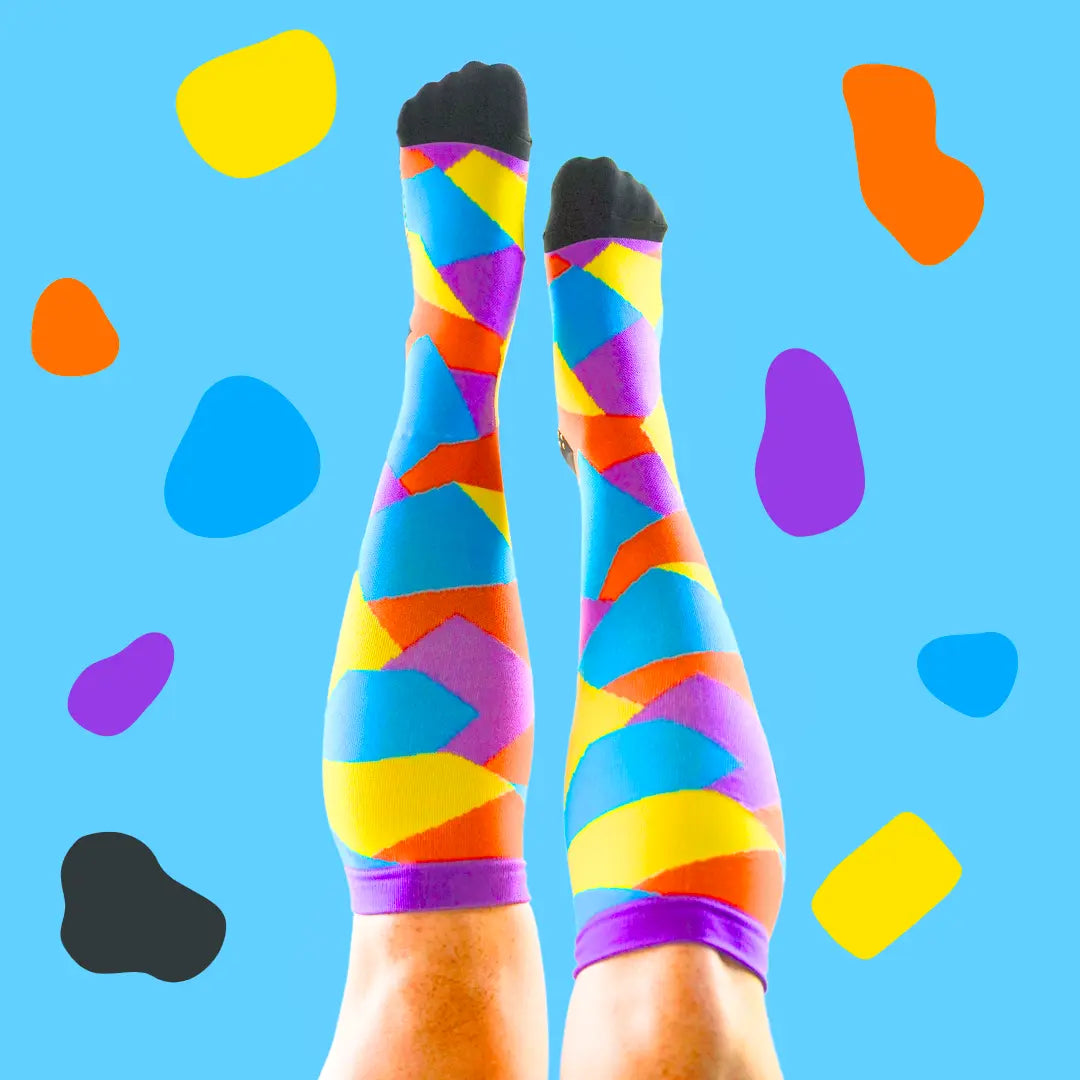


Yes, you should consider wearing compression socks while walking because they can reduce swelling in the feet and ankles, support venous return, limit calf fatigue and muscle soreness, aid post-walk recovery, and provide lower-leg support. They work through graduated pressure, which supports upward venous blood flow, limits fluid build-up, and complements the calf muscle pump. Properly fitted compression socks should not restrict healthy circulation during walking. Compression socks are particularly useful for long walks, hikes, all-day standing, long-distance walking, pregnancy, and clinician-approved recovery routines. Regular walkers, people with venous insufficiency or varicose veins, pregnant women, and older adults can use them when appropriate.
For walking, options include knee-high socks, ankle or low-cut socks, and compression sleeves. Compression levels range from mild (8-15 mmHg) to extra-firm (30-40+ mmHg), with stronger levels requiring an established medical need or professional guidance. Wear compression socks throughout the required walking or daytime activity period. Choose socks based on compression level, fit, length, moisture-wicking material, graduated design, and ease of application to keep them secure, comfortable, and properly positioned throughout your walk.
What Are the Benefits of Wearing Compression Socks While Walking?

The benefits of wearing compression socks while walking include reduced swelling in the feet and ankles, less calf fatigue and muscle soreness, improved circulation and venous return, faster recovery after walking, and added support for joints and ligaments. These advantages can make walking more comfortable by supporting the lower legs and reducing physical strain during and after activity.
5 key benefits of wearing compression socks while walking are:
- Reduces swelling in the feet and ankles
Compression socks reduce swelling in the feet and ankles during or after prolonged walking by limiting fluid accumulation in the lower legs. Prolonged walking or standing can contribute to oedema and venous pooling, causing fluid to collect around the feet, ankles and lower legs. A 2025 randomised crossover study of 44 participants found that wearing 18-21 mmHg or 23-32 mmHg medical compression stockings significantly reduced lower-leg oedema during two hours of prolonged standing, with the higher compression level producing the least oedema development (Luger et al., 2025). These findings indicate that compression stockings can help control lower-leg swelling during extended periods on the feet.
- Less calf fatigue and muscle soreness
During longer walks, compression socks reduce perceived calf fatigue and muscle soreness by supporting the calf muscles with lower-leg compression. This support can improve muscle comfort and reduce lower-leg fatigue and post-walk soreness. A 2025 review of 27 studies found that compression garments significantly improved muscle strength and power recovery after exercise-related fatigue (Li et al., 2025). The reported results indicated that compression garments can support muscular recovery after fatigue.
- Improves circulation and venous return
For individuals with blood pooling in the lower legs, compression socks can support venous return during walking by helping venous blood move through the veins toward the heart. This support can reduce blood pooling and assist lower-leg blood flow, particularly when walking or remaining upright for extended periods. Supporting blood flow out of the lower legs can also help maintain venous circulation and reduce feelings of heaviness associated with prolonged activity. As a result, compression socks can help the veins return blood towards the heart more effectively during walking.
- Faster recovery after walking
After long-distance walking or hiking, compression socks support post-walk recovery by helping manage lower-leg swelling, leg heaviness, and muscle soreness from prolonged walking. Because these symptoms can persist after activity ends, wearing compression socks during recovery provides continued lower-leg support and improves perceived comfort. This recovery support helps walkers manage swelling, soreness, and heaviness while their legs recover, but it does not guarantee faster tissue repair.
- Supports for joints and ligaments
Compression socks provide lower-leg support around the ankle and surrounding joints during long-distance walking, which can improve perceived stability and walking comfort. A 2024 meta-analysis of 27 studies involving 671 participants found that compression garments significantly reduced errors in joint-position sensing, indicating improved proprioceptive awareness (Ghai et al., 2024). This support differs from mechanical joint stability, so compression socks should not replace braces, orthoses, or medical devices for injured joints or ligaments.
How Do Compression Socks Work While Walking?

Compression socks work by applying graduated pressure to the lower legs while walking, supporting venous blood flow towards the heart, limiting fluid build-up, and working with the calf muscle pump to support venous return. Together, these actions help manage blood and fluid movement in the lower legs as muscles repeatedly contract and relax with each step.
Below are the 4 key ways compression socks work while walking:
- Apply graduated pressure
Compression socks apply graduated pressure while walking, with greater external pressure around the ankle and progressively less pressure towards the calf and higher up the lower leg. This compression gradient, measured in mmHg, creates a controlled pressure pattern that supports venous blood movement up the leg as each walking step activates the lower-leg muscles. Higher pressure at the ankle helps limit venous blood from remaining in the lower extremities, while lower pressure higher up supports its movement toward the heart. This pressure pattern provides continuous lower-leg support throughout the walking cycle.
- Support blood flow back up the legs
During prolonged walking, venous blood can accumulate in the lower legs when its return towards the heart becomes less efficient. Compression socks apply external pressure that supports the veins and helps venous valves maintain upward blood flow toward the heart. As leg muscles repeatedly contract during walking, this support helps move venous blood through the veins and promotes venous return. This specifically supports venous blood flow from the lower legs, rather than forcing arterial blood upward.
- Helps reduce fluid build-up in the lower leg
With prolonged walking, fluid can accumulate in lower-leg tissues and around the ankles as increased venous pressure contributes to interstitial fluid entering surrounding tissues. Compression socks apply external pressure that helps limit fluid build-up by supporting venous return and reducing conditions associated with oedema formation. Compression can also support lymphatic drainage, helping interstitial fluid move away from lower-leg tissues. This mechanical action helps regulate fluid movement around the lower legs and ankles while walking.
- Work with the calf muscle pump
Compression socks support the calf muscle pump while walking by applying external pressure around the lower legs as the calf muscles contract and relax with each step. Calf muscle contraction compresses the deep veins and helps move venous blood upwards, while venous valves limit backward flow as the muscles relax. Compression socks complement this natural pumping action by maintaining external pressure around the lower leg. Together, muscle contraction and compression support venous return and help move venous blood towards the heart throughout the walking cycle.
Do Compression Socks Restrict Blood Flow During Walking?
No, properly fitted compression socks do not restrict healthy blood flow during walking, instead, they support venous return by helping veins move blood back towards the heart. Graduated compression applies greater pressure at the ankle and progressively less pressure higher up the leg, while compressing superficial veins to complement the calf muscle pump during movement. Healthy arterial blood flow travels through deeper vessels and is not restricted by properly fitted standard compression. Excessive compression, poor fit, or PAD can create risk, with warning signs including numbness, cold feet, skin discolouration or increasing pain.
When Are Compression Socks Most Useful for Walking?
Compression socks are most useful for long walks and hikes, long-distance walking, all-day periods on your feet, pregnancy, and daily recovery routines where your legs experience prolonged physical load. In these situations, compression can provide continued lower-leg support and help manage swelling, heaviness, and discomfort associated with extended periods of walking or standing.
Below are the 5 situations where compression socks can be most useful for walking:
- Long walks and hikes
Compression socks can provide lower-leg support during long walks and hikes, where longer walking durations and repeated steps over uneven terrain place sustained demands on the calves and ankles. As a hike progresses, prolonged walking can contribute to calf fatigue, ankle swelling, fluid pooling, and leg heaviness. Compression socks help manage these hiking-related effects by supporting venous return and limiting swelling around the ankles and lower legs. This support can help maintain walking comfort over longer hiking distances, but compression socks do not prevent hiking-related injuries.
- Walking all day on your feet
When you walk all day or stand for long periods, compression socks support the feet and lower legs by helping manage venous pooling, ankle swelling, and leg heaviness. Repeated walking and extended time on your feet can allow blood and fluid to accumulate in the lower legs as the day progresses. Compression socks support venous return and help limit this accumulation. This is especially relevant for occupational walking, such as work that requires several hours of repeated walking and standing.
- Long-distance walking
For people walking long distances, such as athletes completing endurance walks, compression socks can help manage the demands placed on the lower legs by prolonged activity and repetitive calf muscle contractions. Longer walking distances can contribute to lower-leg fatigue, calf soreness, swelling, and leg heaviness. By supporting venous return and reducing lower-leg swelling, compression socks can maintain walking comfort and help manage these symptoms during recovery, without guaranteeing greater walking speed or endurance.
- Walking during pregnancy
Compression socks are useful for pregnant women who walk regularly, as pregnancy can increase venous pressure and contribute to oedema, ankle swelling and varicose veins. A 2025 study found that pregnant women with leg oedema who wore compression stockings for one week had significantly higher venous blood flow (143.22 vs. 97.03 mL/min) and venous velocity (7.69 vs. 5.36 cm/s) than those without compression (p < .0001) (Mori et al., 2025). These results indicate that compression stockings can support lower-leg venous circulation during pregnancy. When clinically indicated, discuss the appropriate compression level with a healthcare professional.
- Walking as part of daily recovery
After a procedure or injury, recovery walking may be part of a clinician-approved mobility routine to help restore normal movement. In appropriate cases, compression socks can complement this walking routine by supporting venous return and helping manage lower-leg swelling as mobility increases. This combination can support comfort while gradually returning to daily walking. Compression socks are not suitable after every surgery or injury, particularly when wounds, circulation, or tissue healing require specific care, so their use during post-procedure or post-injury recovery should follow medical guidance.
Who Should Wear Compression Socks for Walking?
Compression socks can be worn by regular walkers and hikers, people with varicose veins or venous insufficiency, people who spend all day on their feet, pregnant women, and older adults. These groups can experience swelling, leg heaviness, venous pooling, or lower-leg fatigue, making compression useful for supporting venous return and maintaining walking comfort.
Below are the 5 groups of people who can benefit from wearing compression socks:
- Regular walkers and hikers
Regular walkers and hikers can choose compression socks as part of their walking routine, especially for longer walks or hikes where sustained walking demands on the lower legs. They are optional for healthy walkers seeking added leg comfort during extended activity, not required for everyday walking.
- People with varicose veins or venous insufficiency
Individuals with varicose veins or chronic venous insufficiency can wear compression socks while walking to support the function of weakened venous valves and manage venous pooling in the lower legs. Compression is commonly used for symptoms associated with these conditions, including oedema, leg swelling and heaviness.
- People on their feet all day
People who spend most of the day standing, walking or alternating between both can wear compression socks to support their lower legs throughout prolonged activity. Extended time on the feet can contribute to venous pooling, leg heaviness, ankle swelling and lower-leg fatigue as the day progresses. Compression socks are therefore relevant for people whose daily routine involves prolonged standing or occupational walking.
- Pregnant women
When pregnancy causes oedema, swollen ankles and feet, venous discomfort or varicose veins, pregnant women can choose compression socks to support walking comfort and manage increased venous pressure in the lower-leg veins. Those who require stronger compression levels or have underlying pregnancy complications should seek guidance from a healthcare professional before selecting compression strength.
- Older adults
For older people, compression socks are a useful option when reduced mobility, venous insufficiency, leg swelling, or prolonged sitting or standing affects the lower legs. They can support venous circulation and help manage swelling while walking, but suitability depends on arterial circulation, skin integrity, sensation, and mobility. Older adults with peripheral arterial disease, impaired sensation, or skin problems should seek medical guidance before using compression socks.
Who Should Avoid Compression Socks While Walking?
Compression socks should be avoided by people with peripheral arterial disease (PAD), severe peripheral neuropathy, or certain skin conditions unless a healthcare professional confirms that compression is safe. These conditions can increase the risk of impaired circulation, unnoticed excessive pressure, or skin damage while walking.
Below are the 3 groups who should avoid compression socks while walking:
- People with peripheral arterial disease (PAD)
People with peripheral arterial disease (PAD) should avoid compression socks without medical assessment because external pressure can further reduce arterial blood flow and foot perfusion. A vascular assessment, including the ankle-brachial index (ABI) where appropriate, can determine whether compression is safe.
- People with severe peripheral neuropathy
When conditions like severe peripheral neuropathy cause numbness or loss of sensation, people should avoid compression socks because excessive pressure, poor fit or skin damage may go unnoticed. Medical guidance is needed to determine whether compression can be used safely based on sensation, skin condition and individual risk.
- People with certain skin conditions
Avoid compression socks when certain skin conditions involve open wounds, active infections, severe irritation, or fragile skin, as external pressure and friction can worsen skin damage. Medical guidance can determine whether compression is appropriate based on skin integrity and the underlying condition.
What Types of Compression Socks Are Best for Walking?
The best types of compression socks for walking include knee-high compression socks, ankle or low-cut compression socks, and compression sleeves, depending on the level and area of lower-leg support needed. Each option provides different coverage, so the right choice depends on walking duration, comfort needs, and the part of the leg requiring compression.
3 types of compression socks that are best for walking are:
- Knee-high compression socks
Knee-high compression socks help manage ankle and lower-leg swelling while supporting venous return during walking. They cover the foot, ankle, and calf, providing graduated compression across most of the lower leg. This coverage makes them particularly relevant for walkers who experience swelling around the ankles or calves during or after longer walks. Knee-high socks are not always superior to other compression options, as the suitable type depends on individual coverage and compression needs.
- Ankle/low-cut compression socks
For walkers seeking targeted support around the foot and ankle, ankle or low-cut compression socks provide localised ankle compression while maintaining a comfortable fit inside walking shoes. Their shorter design covers the foot and ankle, which can help maintain walking comfort without extending compression across the full calf. Because these low-cut socks provide limited coverage, they suit localised ankle support and do not provide the same lower-leg compression pattern as knee-high graduated compression socks.
- Compression sleeves
Compression sleeves provide calf support and lower-leg compression while walking, helping manage calf fatigue and maintain lower-leg comfort during prolonged activity. They cover the ankle and calf while leaving the foot uncovered, allowing walkers to pair a calf sleeve with preferred socks and walking footwear. Unlike full compression socks, their foot-free design does not apply compression across the foot. Their coverage and function differ from properly fitted graduated compression socks, so their effects can vary by walking context.
Are Compression Socks Good for Walking With a Walking Boot?
Yes, compression socks are good for walking with a walking boot when they are appropriate for the injury and do not interfere with the boot fit. They can help reduce swelling and support circulation while the lower leg is immobilised or movement is restricted. However, sock thickness and prescribed compression can alter the fit of an orthopaedic boot and create pressure points. Regular skin inspection helps identify irritation or circulation problems. If your doctor prescribes a walking boot for an injury, follow orthopaedic, podiatric, or medical guidance when using compression socks underneath it.
What Compression Level Should You Choose for Walking?
The compression levels you can choose for walking include mild (8-15 mmHg), moderate (15-20 mmHg), firm (20-30 mmHg), and extra firm (30-40+ mmHg), with the appropriate level depending on your circulation needs, swelling severity, and medical guidance. Lower compression levels are commonly used for general walking comfort and mild swelling, while higher compression levels are selected for more significant venous or swelling needs and can require guidance from a healthcare professional.
- Mild (8-15 mmHg)
Mild compression socks at 8-15 mmHg provide light lower-leg support that can improve walking comfort during everyday walking. This lower compression range is often marketed for people experiencing mild leg fatigue, light swelling, or discomfort associated with prolonged standing and travel. The gentle pressure makes mild compression suitable for routine activities where stronger compression is not required. An 8-15 mmHg level is intended for general comfort and support, not for treating diagnosed venous disease.
- Moderate (15-20 mmHg)
When ankle swelling becomes more noticeable during walking or prolonged standing, moderate compression at 15-20 mmHg provides greater lower-leg pressure than mild compression and helps manage swelling, heaviness, fatigue, and discomfort. In a study of 40 security workers completing 12-hour standing shifts, lower-leg volume increased to 102.09% of baseline with regular socks, while 15-20 mmHg compression stockings caused no significant increase in leg volume (Garcia et al., 2023). This makes 15-20 mmHg a practical option for extended periods of standing or other prolonged upright activity when light compression does not provide enough support.
- Firm (20-30 mmHg)
Individuals with chronic venous insufficiency, varicose veins, or clinically significant oedema can use firm compression at 20-30 mmHg when medical-grade compression is indicated. Current vascular guidelines classify 20-30 mmHg as moderate compression and support compression therapy for reducing pain and swelling associated with chronic venous disease (Gloviczki et al., 2024). For walkers with these conditions, this compression level can better control lower-leg swelling and venous symptoms during prolonged activity. Use it only when medically necessary or recommended by a professional, not for routine walking comfort.
- Extra firm (30-40+ mmHg)
Compression socks with extra-firm compression at 30-40+ mmHg are high-compression garments used for specific medical indications, such as severe venous disease, significant lower-leg swelling, or lymphoedema. This level applies substantially greater pressure than compression intended for routine walking and should not be selected casually. Walkers who require 30-40+ mmHg compression should have a clinical assessment to confirm suitability, while professional fitting and medical supervision help ensure the correct compression level, size, and application.
How Long Should You Wear Compression Socks While Walking?
You should wear compression socks for the entire duration of your walk and can keep them on for 8 to 12 hours during normal upright activity. Put them on in the morning before lower-leg swelling develops, then keep them on throughout the walk, whether completing a short stroll or a long hike, to support calf muscles and blood flow. After walking, you can keep compression socks on for another 2 to 3 hours to help manage swelling and post-walk muscle soreness.
During wear, remove the socks and reassess their fit if you develop pain, numbness, tingling, cold feet, skin discolouration, irritation, or unusual swelling. Regular removal also allows you to inspect your skin for pressure marks or damage. Follow the specific wearing schedule your clinician provides.
How Do You Choose the Best Compression Socks for Walking?

Choose the best compression socks for walking by selecting the right compression level, proper fit, comfortable length, moisture-wicking material, graduated compression design, and easy application based on your walking needs and lower-leg support requirements. These factors help ensure the socks provide consistent lower-leg support without causing excessive pressure, slipping, bunching or discomfort during short and long walks.
6 key factors when choosing the best compression socks for walking are:
- Right compression level
Choose 8-15 mmHg for everyday walking and mild swelling, 15-20 mmHg for prolonged walking or moderate swelling, and 20-30+ mmHg for medical needs under professional guidance. The right pressure should provide effective lower-leg support without causing pain, numbness, or excessive tightness while walking.
- Proper fit
Measure your ankle, calf, and leg length according to the manufacturer's sizing guide. Select socks that fit securely without rolling, bunching, slipping, or creating painful pressure points. A proper fit helps distribute compression evenly across the lower leg and maintains comfort throughout your walk.
- Comfortable length
Select knee-high socks for broader lower-leg coverage or ankle-length socks for localised foot and ankle support. Choose a length that works comfortably with your walking footwear and does not roll, restrict movement, or cause discomfort. Longer walks may benefit from broader coverage when you need lower-leg support.
- Moisture-wicking material
Choose materials such as nylon, polyester, or merino wool blends that move moisture away from the skin and dry efficiently. Breathable, moisture-wicking fabrics help keep the feet and lower legs dry and comfortable during long walks.
- Graduated compression design
Select socks that apply greater pressure around the ankle and progressively less pressure towards the calf. This graduated compression pattern supports venous return and helps manage lower-leg swelling while walking.
- Easy application
Consider compression socks that are practical for donning, proper positioning, and doffing, especially if you have reduced hand strength, grip, flexibility, mobility, or dexterity. The socks should sit smoothly without wrinkles or folds, while a sock aid can make application easier.
How Do You Get the Right Fit for Walking Compression Socks?
The right fit for walking compression socks is determined by measuring your ankle circumference, calf circumference, and relevant leg length, then matching these measurements to the manufacturer's sizing chart rather than relying only on shoe size. Take measurements in the morning before swelling becomes pronounced where practical, and always follow the specific sizing chart because sizing systems differ between manufacturers.
The 6 steps to get the right fit for walking compression socks are:
- Check ankle circumference: Wrap the measuring tape around the narrowest part of the ankle, just above the ankle bone.
- Find calf circumference: Wrap the tape around the widest part of the calf while keeping it level.
- Determine leg length: Record the required leg length per the manufacturer's instructions, especially for knee-high compression socks.
- Follow the sizing chart: Match your ankle, calf, and leg measurements to the manufacturer's sizing chart rather than relying only on shoe size.
- Assess the fit: Socks should feel snug but not painful, with no wrinkles, bunching, deep folds or rolling at the top band.
- Monitor circulation and comfort: Your toes should remain warm and normally coloured. Remove the socks and reassess the fit if you develop numbness, tingling, pain, cold toes, or skin discolouration.
Where Can You Buy the Best Compression Socks for Walking?
You can buy compression socks for walking from certified medical supply stores, pharmacies, specialty running or outdoor retailers, compression-wear brands and established online retailers. For general walking, compare the compression rating, mmHg labelling, material, manufacturer sizing chart, warranty, return policy, and verified product reviews. For prescription compression or stronger medical-grade products, purchase from a pharmacy or certified medical supply store where professional fitting is available. Prioritise correct sizing and clinically appropriate compression socks online over price alone.