



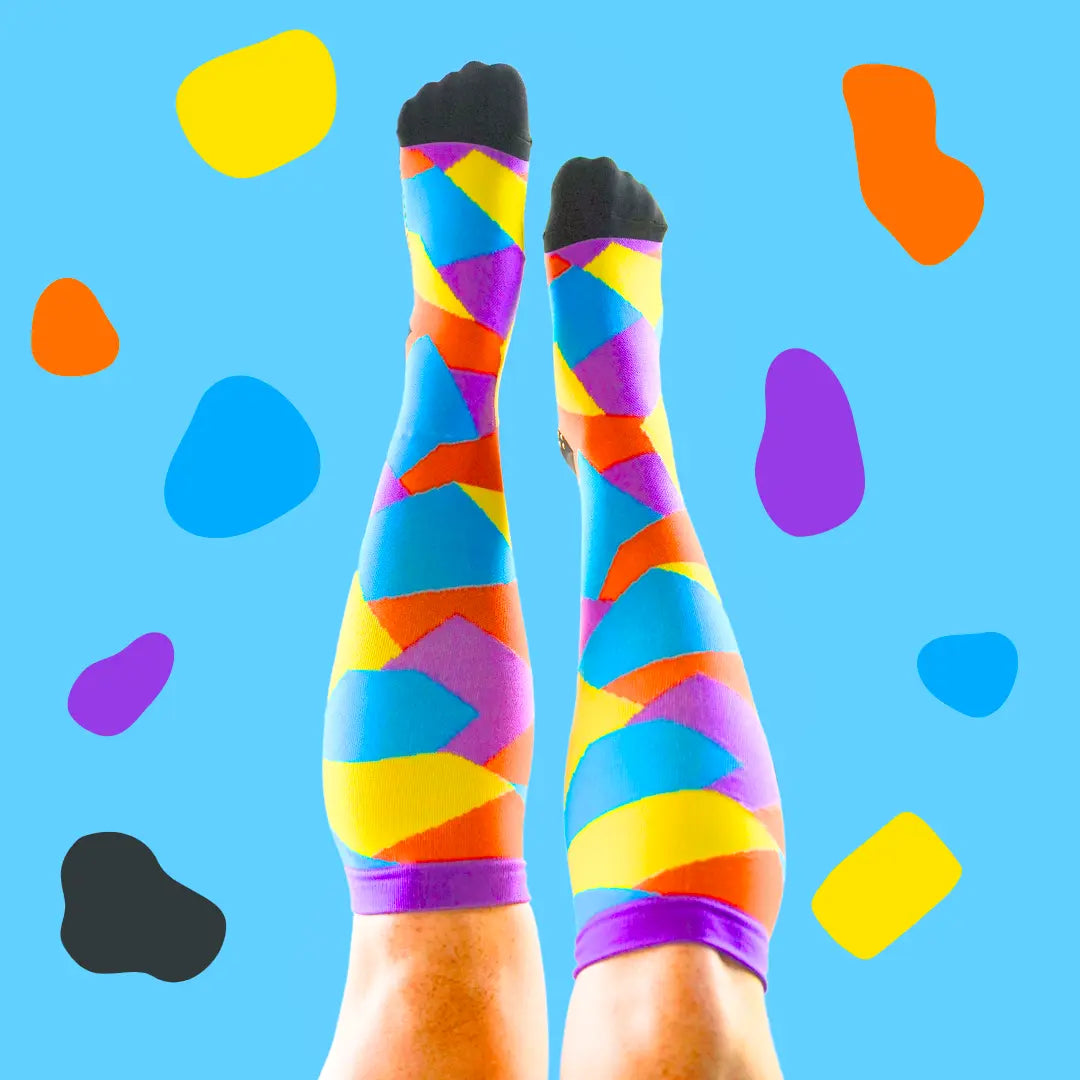


Compression socks are categorised by design, pressure level, and length to support circulation, manage swelling, and address venous conditions. By design, they include gradient compression socks for daily activities and travel, as well as anti-embolism socks used in medical settings for immobile or post-surgery patients to reduce the risk of DVT. Based on pressure, they range from very mild options for everyday comfort to extra firm levels for serious venous conditions under medical guidance. They also vary in length and commonly include calf, ankle, crew, knee-high, and thigh-high socks, each providing targeted full-leg support based on comfort needs, activity level, or medical use.
-
Gradient Compression Socks
Gradient compression socks are specialised hosiery designed with graduated pressure, meaning the compression is strongest at the ankle and gradually decreases up the leg. This design helps reduce swelling and support blood circulation, allowing blood to move upward more effectively. They are widely used to prevent blood clots, treat venous insufficiency, reduce oedema, and ease pregnancy-related leg fatigue. These socks are especially helpful during long periods of standing or sitting, such as work shifts or travel. Many people wear compression socks to manage varicose veins, support circulation, and reduce leg discomfort.
-
Anti-embolism Compression Sock
Recognised as T.E.D. hose or anti-embolism stockings, these compression socks provide consistent compression along the leg to help prevent blood clots by supporting steady blood flow. They are specially designed to help prevent deep vein thrombosis (DVT) and pulmonary embolism (PE) in people with limited mobility, such as patients recovering from surgery or confined to bed. Patients often use compression socks for DVT and circulation in hospitals because graduated compression helps increase blood flow in the legs, reduce blood pooling, and lower clot formation risk.
What are the Types of Compression Socks Based on Pressure Levels?
The types of compression socks based on pressure levels include very mild, mild, medium, firm, and extra firm categories, each measured in millimetres of mercury (mmHg). These pressure levels describe how much controlled compression the socks apply to the legs, which directly influences blood circulation and swelling control. Therefore, selecting the appropriate compression level depends on symptom severity, daily activity demands, and whether the socks are used for preventive support, general assistance, or under medical guidance.
5 of the main types of compression socks based on pressure levels are:
-
Very mild (8-15 mmHg)
Very mild compression socks fall within the 8-15 mmHg pressure range and focus on gentle, everyday circulation support. These socks apply light compression pressure that supports blood circulation and helps manage minor swelling and early leg fatigue during extended periods of sitting or standing. They are commonly worn during travel, desk-based work, or daily routines where comfort matters more than corrective support.
-
Mild (15-20 mmHg): Class 1
With a pressure range of 15-20 mmHg, mild compression socks are used to support mild venous discomfort, light swelling, and leg strain caused by extended periods on the feet. It provides a gentle, consistent gradient pressure, highest at the ankle and decreasing up the leg. This level supports blood flow and helps manage mild swelling, leg fatigue, and early symptoms of varicose veins and light discomfort associated with long workdays or frequent travel.
-
Medium (20-30 mmHg): Class 2
At 20-30 mmHg (Class 2), the medium compression level provides firm support that helps improve circulation and control persistent swelling. This level is recommended for more significant circulatory issues, such as chronic venous insufficiency or moderate varicose veins, to prevent DVT, and for post-surgical recovery, including post-sclerotherapy. These socks apply stronger compression to improve blood flow and reduce swelling, supporting the veins during regular wear. They are recommended for people with chronic venous issues, nurses and teachers on their feet all day, long-distance travellers, and pregnant women with swelling.
-
Firm (30-40 mmHg): Class 3
The 30-40 mmHg range delivers firm compression with high-level, targeted leg support, designed for severe varicose veins, post-surgery recovery, or significant oedema. They apply strong pressure to help control fluid buildup, support blood flow, and aid recovery. They help treat and prevent Deep Vein Thrombosis (DVT) by supporting blood flow and are also used to help prevent economy class syndrome during long periods of sitting, such as long-distance travel.
-
Extra Firm (>40 mmHg): Class 4
Extra-firm compression socks exceed 40 mmHg and are the highest compression category for treating severe venous and lymphatic disorders. This compression sock level delivers intensive pressure designed to manage severe swelling and advanced vascular conditions, and is used for serious venous conditions such as Chronic Venous Insufficiency (CVI) and other chronic or acute circulation problems that require significant pressure. This level is intended for serious medical conditions and should be worn only under the guidance of a healthcare professional.
What are the Types of Compression Socks Based on Length?
Compression socks are classified by length: calf sleeves, ankle socks, crew socks, knee-high socks, and thigh-high socks, each providing a distinct level of coverage and support. Shorter lengths focus on targeted areas such as the ankle or calf, while ankle and knee-high compression socks differ in how much lower-leg coverage and support they provide. In contrast, longer lengths extend higher up the leg to help manage fatigue, swelling, or specific medical needs. Across all lengths, these compression socks support improved blood flow, reduce leg tiredness, and provide added stability during daily activities, long periods of standing, or recovery.
5 types of compression socks based on length are:
-
Calf Sleeves
Calf sleeves provide compression that covers only the calf muscles, offering targeted support without covering the feet. This design helps support circulation in the calves while keeping the feet uncovered, which can be useful for people who prefer wearing regular socks or footwear. Calf sleeves help prevent blood pooling in the lower legs, which makes them effective for long-distance travel and for reducing the risk of Deep Vein Thrombosis (DVT). They are widely used by athletes, runners, and professionals who stand for long hours.
-
Ankle Socks
Also referred to as low-cut or no-show, the ankle socks cover just the ankle, providing support to the lower leg and foot by applying compression around the ankle and light coverage up the leg, making them comfortable and easy to wear. They support blood circulation in the lower foot and ankle, which helps reduce mild swelling and discomfort caused by daily movement or prolonged standing, and also treat conditions such as plantar fasciitis. Because they offer light, targeted compression without covering the calf, they are easy to wear with regular footwear for work or travel.
-
Crew Socks
Designed as mid-length socks that reach mid-calf, crew compression socks provide balanced compression for everyday use. They support circulation in the lower leg while remaining practical for routine activities. They help support circulation, reduce leg fatigue, and manage mild swelling during everyday activities, particularly for runners and those on their feet all day. Crew socks are a practical choice for daily wear or travel.
-
Knee-High
Knee-high compression socks are the most common type and extend from the foot to just below the knee, providing steady compression across the entire lower leg. This length supports circulation in the foot, ankle, and calf, which helps reduce leg fatigue and manage mild to moderate swelling during extended wear. They provide comprehensive lower-leg support, making them well-suited for long periods of standing or sitting, such as during work shifts or travel, where prolonged pressure on the legs can cause discomfort and fatigue.
-
Thigh-High
Covering the leg from the foot up to the thigh, this sock length provides full leg compression and support by applying consistent pressure to both the lower and upper legs, helping support circulation throughout the limb. The broader coverage makes them suitable for compression above the knee. They are commonly used for severe medical conditions, such as advanced varicose veins, severe swelling, and post-surgery recovery, where full-leg compression is needed to support circulation and manage swelling.
Frequently Asked Questions
How Many Hours a Day Should You Wear Compression Socks?
You should wear compression socks for about 8-10 hours a day for general use, especially during work, travel, or long periods of sitting or standing. This duration helps support circulation and manage mild swelling or leg fatigue. For medical conditions such as varicose veins, oedema, or venous disorders, the wearing time should follow a doctor’s recommendation, as some conditions may require longer or more specific use.
What Is the Difference Between 15-20 and 20-30 Mmhg Compression Socks?
15–20 mmHg compression socks are used for mild swelling and general leg support, whereas 20–30 mmHg compression socks provide firmer support for more noticeable swelling, varicose veins, and muscle soreness. The higher compression level applies greater pressure to help improve circulation and manage persistent discomfort. Choosing between these options depends on symptom intensity and whether the compression socks are worn for daily support or to address more advanced leg concerns.
What Type of Compression Socks Are Best for Flying?
The best compression socks for flying are light compression socks (8–15 mmHg), as they support circulation and provide general comfort during long periods of sitting. They help reduce mild leg fatigue, while moderate compression socks (15–20 mmHg) are better suited for travellers who experience mild swelling or leg discomfort during flights.
Are Compression Socks Effective for oedema and Blood Clots?
Yes, compression socks help manage oedema and reduce the risk of blood clots by improving blood flow and limiting fluid buildup in the legs. Mild to moderate compression works for general swelling, while medical guidance is recommended when using compression to prevent or manage blood clots.
What Type of Compression Socks for Varicose Veins?
The types of compression socks for varicose veins are moderate compression socks (15–20 mmHg) for mild varicose veins to support circulation and reduce discomfort, and firm compression socks (20–30 mmHg) for more advanced cases that require stronger support.
Can Compression Socks Help With Leg Pain, Fatigue, and Swollen Feet?
Yes, compression socks help with leg pain, fatigue, and swollen feet by improving circulation and reducing swelling in the lower legs. Moderate compression (15-20 mmHg) is suitable for general fatigue and everyday discomfort, while firm compression (20-30 mmHg) is more effective for noticeable swelling or muscle soreness. The right compression level depends on symptom intensity.