



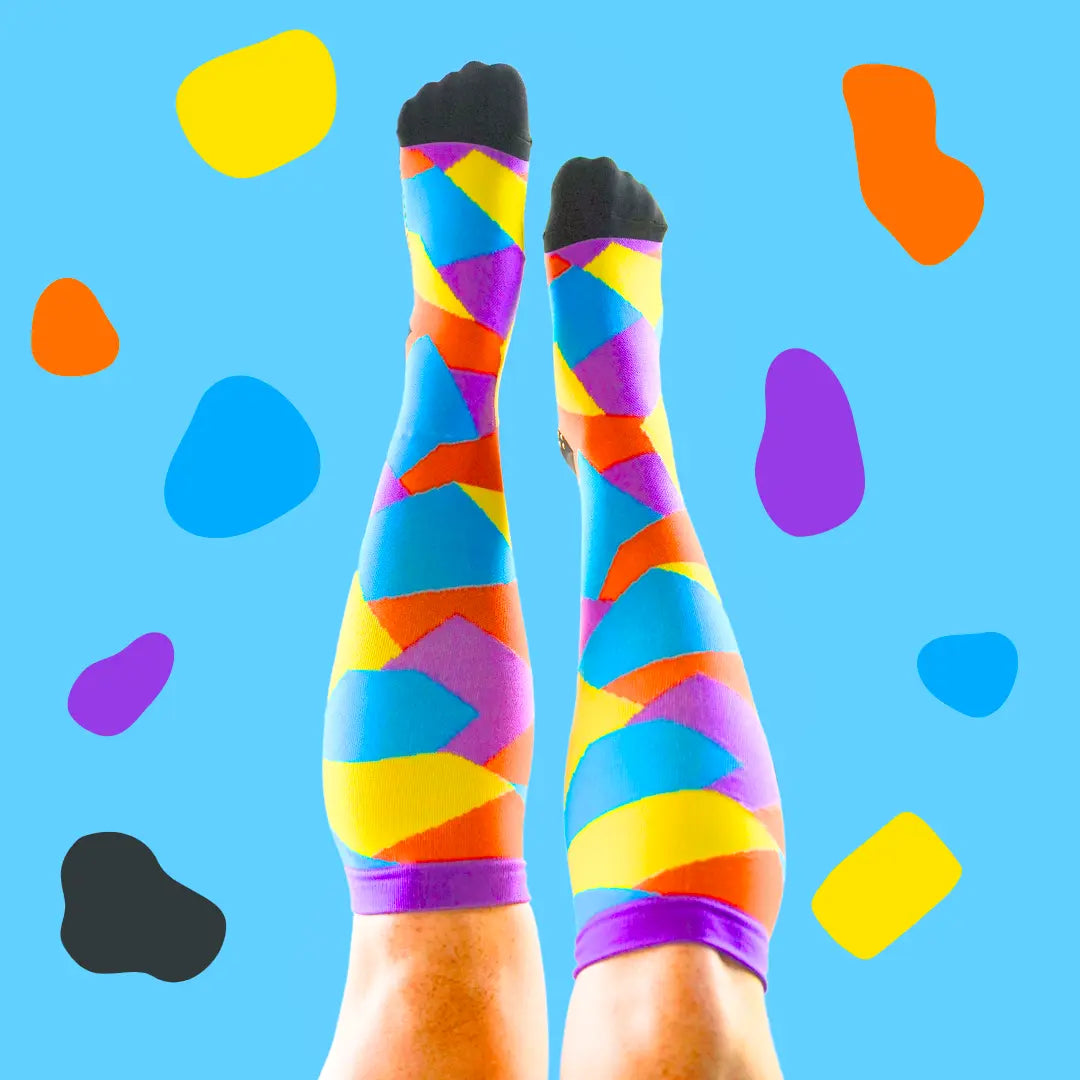


Compression socks are for people who stand or sit for long hours (such as nurses, teachers, drivers, and office workers), athletes, frequent flyers and road travellers, pregnant women, and individuals managing circulation-related conditions, including varicose veins, deep vein thrombosis (DVT), and oedema. These groups commonly experience reduced leg circulation, fluid buildup, or muscle fatigue due to prolonged immobility, physical strain, hormonal changes, or vein weakness, making targeted compression support particularly useful.
By applying graduated pressure along the lower legs, compression socks actively support circulation and fluid movement where the body needs it most. They help professionals reduce workday fatigue, assist athletes with performance and recovery, limit swelling during long travel, and support people managing varicose veins, DVT risk, or oedema. When worn during circulation-stressed periods and matched to the correct pressure level, compression socks provide reliable, everyday support for leg comfort, prevention, and function.
People Who Stand or Sit for Long Periods
Compression socks are used by people who stand or sit for long periods to manage aching legs, calf fatigue, and lower-limb swelling through graduated pressure that supports venous blood flow. In an occupational setting, Garcia et al. (2021) reported that the use of compression stockings was associated with reduced development of lower-leg muscle fatigue, oedema, and discomfort over very long standing workdays. Constructed with elasticized fabric and a snug, knee-high profile, these socks provide consistent support without producing a tourniquet effect and remain practical for extended daily wear.
-
Nurses
For nurses managing long, physically demanding shifts, compression socks for nurses help stabilize circulation in the calves and lower legs during constant movement and standing. The graduated pressure gently squeezes blood vessels, increases blood flow velocity, and limits fluid buildup that leads to aching legs and swelling. This support reduces fatigue during extended shifts, while moisture-wicking, antimicrobial fabrics help the skin breathe in warm, high-humidity clinical environments.
-
Teachers
In a profession built around standing, pacing, and staying upright for most of the day, compression socks provide teachers with steady lower-leg support. The controlled pressure prevents blood pooling in the calves, improves circulation, and reduces soreness or cramp episodes caused by prolonged standing. Medium-firm or firm-compression designs help oxygenate the blood and ease fatigue, while breathable materials like cotton or rayon from bamboo help maintain comfort without trapping excess humidity.
-
Retailers
During long retail shifts spent almost entirely on hard floors, compression socks help counter the physical strain placed on the feet and calves. By supporting veins and maintaining consistent circulation, these socks reduce swelling, soreness, and end-of-day fatigue. Padding and ribbed texture help distribute pressure more evenly, while rugged elasticized fabric preserves elasticity and compression strength across frequent wear, wash cycles, and air-drying.
-
Drivers
When work requires hours of uninterrupted sitting, compression socks help drivers and office workers maintain healthy leg circulation despite limited movement. The gentle, graduated pressure supports venous return through the calf and knee-high region, reducing swelling, cramped muscles, and aching legs during long seated periods. Wide-calf and unisex designs provide a snug fit without excess tightness, making them suitable for consistent daily use.
Sportsperson
For athletes and sports enthusiasts, compression socks serve as functional compression garments that support performance by managing calf load, circulation demands, and fatigue during repeated high-intensity movement. Graduated compression socks apply a firm, controlled squeeze along the calf that helps boost circulation, reduce muscle vibration, and delay fatigue during tough workouts. Many athletes use running with compression socks as part of their training routine to improve comfort, stability, and recovery during longer runs and intense exercise sessions.
The study "Effect of pressure intensity of graduated elastic compression stocking on muscle fatigue following calf-raise exercise" (2010) found that graduated compression with higher pressure at the ankle and calf reduced fatigue in the triceps surae muscle during exercise. For athletes, this results in less post-training soreness, improved exercise recovery, and better readiness for subsequent sessions, naturally leading to the benefits compression socks offer for people who remain seated for long periods, such as frequent flyers and road travellers.
Frequent Flyers and Road Travellers
Extended travel keeps the legs inactive for hours, which can strain circulation and lead to fluid accumulation in the lower limbs. Compression socks help frequent flyers and road travellers by applying graduated pressure along the calf, which boosts circulation, supports blood flow back toward the heart, and moves waste fluids out of the legs. This reduces aching legs, swelling, and cramped sensations commonly felt during long flights or road journeys. Many travellers wear compression socks for flying to support circulation and improve comfort during extended periods of sitting.
A study by Silva et al. (2021) found oedema reduction among passengers who wore graduated compression stockings during 3-hour flights, indicating clear relief for travellers experiencing lower-limb swelling, pain, or discomfort. By supporting circulation and reducing fluid retention associated with aviation-induced circulatory issues, compression socks are a practical travel aid, making them particularly relevant for people with underlying medical conditions.
People With Medical Conditions
People with varicose veins, deep vein thrombosis (DVT), oedema, and swollen feet use compression socks to manage swelling, discomfort, and circulation problems in the lower legs. Graduated compression supports weakened veins by boosting circulation, increasing blood flow velocity, and helping move waste fluids out of the affected leg, which reduces heaviness and pain. When used appropriately, compression socks help stabilize symptoms linked to venous insufficiency and fluid retention, supporting daily comfort and mobility.
-
Varicose Veins
People with varicose veins use compression socks to reduce vein pressure, swelling, and aching caused by poor venous return. Graduated compression in compression socks for varicose veins applies a controlled squeeze along the calf, supporting weakened blood vessels, improving blood flow velocity, and helping prevent blood from pooling in visible or painful veins. This support eases the heaviness and discomfort associated with chronic venous insufficiency.
-
Deep Vein Thrombosis (DVT)
When circulation slows due to immobility, surgery recovery, or prolonged sitting, compression socks help reduce the risk of deep vein thrombosis (DVT) by supporting steady blood flow in the lower limbs. Compression socks for DVT and circulation use graduated compression to promote venous return and limit blood pooling, thereby lowering the risk of clot-related venous thromboembolism (VTE). Evidence from Mechanical Methods for Thrombosis Prophylaxis (2009) reported a 68% reduction in postoperative DVT among moderate-risk patients using graduated elastic stockings under medical guidance.
-
Oedema
Compression socks help manage oedema by reducing persistent leg swelling caused by fluid retention. Graduated compression supports venous and lymphatic flow, and compression socks for oedema are commonly used to help move excess fluid out of the affected leg and lower pressure buildup during daily movement. Clinical evidence from "Compression Stockings with Moderate Pressure Are Able to Reduce Chronic Leg Oedema" (2012) shows that stockings exerting around 30 mmHg were nearly as effective as high-pressure bandages over 60 mmHg in reducing chronic leg oedema.
-
Swollen Feet
For swelling in the feet and ankles that develops after prolonged standing or sitting, compression socks help manage fluid buildup by supporting upward circulation from the feet through the calf. Graduated pressure reduces fluid retention, eases tightness around the ankles, and helps prevent soreness from worsening throughout the day. By improving blood flow and limiting pressure accumulation, consistent use supports better mobility, reduces end-of-day discomfort, and promotes overall leg comfort throughout the day.
Moms-To-Be Looking for Relief During Pregnancy
During pregnancy, hormonal changes, increased blood volume, and added pressure on pelvic veins often slow circulation in the legs, leading to swollen feet, calf tightness, and aching legs. Compression socks help moms-to-be by applying gentle, graduated pressure that supports venous return, boosts circulation, and moves excess fluids out of the lower limbs. This helps reduce daily swelling, ease heaviness, and improve comfort during prolonged standing or sitting.
The study "Positive perception and efficacy of compression stockings for prevention of lower limb oedema in pregnant women" (2022) concluded that compression stockings were effective in preventing lower-limb oedema, with pregnant women reporting positive perceptions related to comfort, wearability, and daily use. This makes compression socks a practical, well-tolerated option for managing pregnancy-related leg swelling.
How Long Should You Wear Compression Socks?
The ideal duration for wearing compression socks depends on how long your legs are exposed to reduced circulation, such as prolonged standing, sitting, physical exertion, or travel. For most people, how long to wear compression socks depends on the activity, such as work hours, exercise sessions, or the full duration of a journey. Wearing compression socks overnight is usually avoided unless a healthcare professional advises otherwise.
How Long Should Compression Socks Be Worn During Regular Daily Activities?
For daily use, compression socks are typically worn for 8 to 12 hours, especially by people who stand or sit for extended periods. Wearing them during work hours helps maintain circulation, reduce swelling, and limit leg fatigue. They are usually removed when the legs are elevated or at rest.
How Long Should Athletes Wear Compression Socks During or After Exercise?
Athletes commonly wear compression socks during workouts for support and up to 2–4 hours after exercise to assist recovery. Wearing them during cool-down stretches and within the first hour after training helps maintain circulation, reduce soreness, and manage muscle fatigue as the legs recover from strain.
How Long Should Compression Socks Be Worn During Long Trips or Flights?
During long trips or flights, compression socks should be worn for the entire journey to support circulation and reduce the risk of swelling, blood clots, and deep vein thrombosis (DVT) while seated. The Institute for Quality and Efficiency in Health Care recommends putting on compression stockings at least 2 hours before departure and keeping them on throughout travel. They can be removed after arrival once regular movement resumes.
Should Compression Socks Be Worn at Night or While Sleeping?
Compression socks are usually not recommended during sleep because lying down already supports natural blood flow without added pressure. Wearing them overnight may increase the risk of discomfort, skin irritation, or uneven pressure if the socks shift. Night use should only occur when a healthcare professional specifically advises it, such as for certain cases of severe swelling or post-surgery support.
What Are the Benefits of Compression Socks for Daily Use?
For daily use, compression socks are worn during normal work or activity hours to support circulation when the legs are under constant strain from prolonged standing, sitting, or light movement. The benefits of compression socks come from graduated pressure along the calf, which helps boost circulation, increase blood flow velocity, and move waste fluids out of the legs. This reduces end-of-day swelling, heaviness, and aching legs.. This makes compression socks suitable for everyday routines where leg fatigue gradually builds over time.
5 key benefits of compression socks are:
- Improved circulation: Supports steady blood flow during long workdays or extended sitting
- Reduced swelling: Helps manage fluid retention in the legs, ankles, and feet
- Lower leg fatigue: Limits aching legs caused by prolonged daily activity
- Vein support: Assists vein function and reduces pressure buildup over time
- Sustained comfort: Breathable, moisture-wicking materials help the skin breathe during all-day wear
Who Should Not Use Compression Socks?
Compression socks should not be used by people with circulatory disorders, chronic medical conditions, active skin problems, or low tolerance to pressure. In these cases, the compression applied can restrict blood flow, irritate damaged skin, or worsen existing symptoms. Anyone with these risks should seek medical advice before wearing compression socks to ensure safe use and avoid complications.
-
People With Circulatory Issue
People with circulatory disorders such as peripheral artery disease (PAD) already have reduced blood flow to the lower limbs. Compression socks apply external pressure that can further restrict circulation, increasing the risk of pain, numbness, or tissue damage. For this reason, compression should only be used when a healthcare professional confirms it is safe.
-
People With Chronic Illness
Chronic illnesses affecting the heart, kidneys, or vascular system can disrupt fluid balance and circulation. Compression socks may add pressure that interferes with these systems if not carefully managed. Medical supervision is necessary to determine whether compression will support circulation or create additional strain.
-
People With Any Pre-Exisiting Conditions
Pre-existing medical conditions such as uncontrolled diabetes, phlebitis, or venous thromboembolism (VTE) may have increased sensitivity to pressure or impaired healing. Compression socks used without guidance can raise the risk of circulation problems or skin injury. These individuals often require prescription-grade compression or alternative management strategies.
-
People With Severe Skin Conditions or Active Infections
Individuals with skin ulcers, leg ulcerations, eczema, open wounds, or active bacterial or fungal infections have compromised skin integrity. Compression socks can irritate damaged tissue, trap moisture, and delay healing. In these cases, compression may worsen the condition rather than support recovery.
-
Individuals With High Blood Pressure
People with high blood pressure may experience challenges with circulation regulation and blood return. Compression socks can sometimes cause discomfort, dizziness, or circulatory imbalance if the pressure affects the cardiovascular response. Consulting a healthcare professional helps determine whether compression is appropriate and safe.
FAQs
Are compression socks beneficial for people with oedema?
Yes, compression socks are beneficial for people with oedema because they help reduce leg swelling caused by fluid retention. The graduated pressure supports venous and lymphatic flow, helping move excess fluid out of the affected leg and back into circulation. This reduces pressure buildup, eases discomfort, and improves daily mobility when compression is used at an appropriate pressure level.
How do I know if compression socks are too tight?
Your compression socks are too tight if they cause numbness, tingling, increased pain, skin discolouration, or deep indentations that remain after removal. Excessive tightness can also create a tourniquet effect around the calf or cuff. Proper compression should feel snug and supportive, not painful, and the socks should stay in place without restricting movement or causing discomfort.
Can I wear compression socks while exercising or running?
Yes, you can wear compression socks during exercise or running to actively support calf muscles and maintain circulation. Compression socks reduce muscle vibration, help manage fatigue, and promote steady blood flow while you move. Many athletes also wear them after workouts to speed recovery, ease soreness, and continue supporting circulation as muscles recover from strain.