



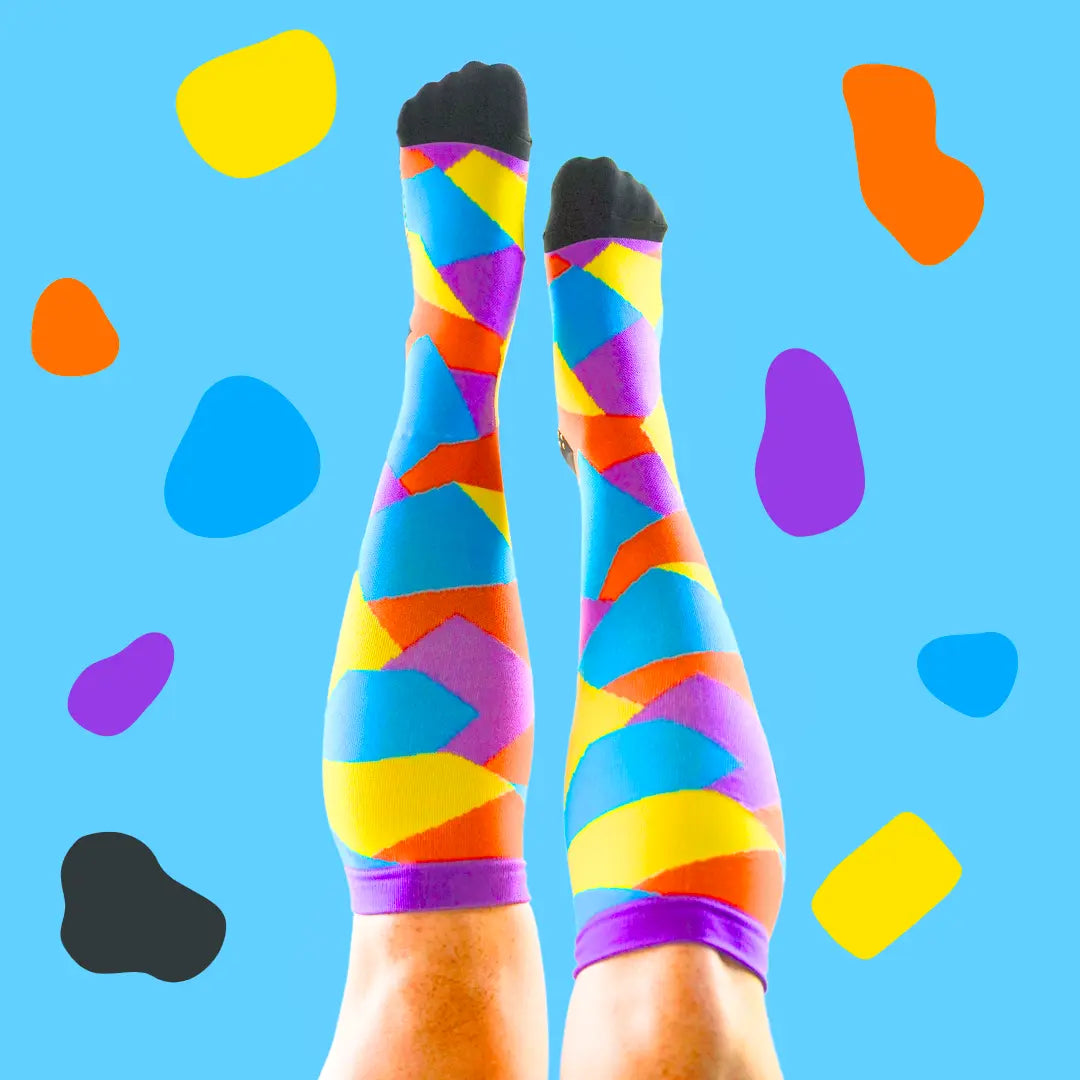


Compression socks provide targeted support to improve blood circulation, reduce swelling, and help prevent blood clots in the lower legs. By applying graduated compression, they help veins move blood efficiently toward the heart, especially during long periods of sitting or standing. This steady pressure reduces fluid buildup, supports vein function, and helps limit issues such as oedema, varicose veins, and leg fatigue.
These benefits make them useful for travellers, workers who stand for extended hours, and athletes seeking better endurance and faster recovery. Individuals with circulation concerns, such as venous insufficiency or swollen ankles, also use compression socks to manage symptoms and maintain comfort. Different compression levels and styles provide varying degrees of support, making it easier to choose options that suit individual needs. As a result, they help reduce fatigue, ease soreness, and promote faster recovery after daily activities or exercise.
9 benefits of compression socks include:
-
Improves Blood Circulation: Applies gentle pressure to your legs, helping blood vessels function more efficiently and flow steadily back to your heart.
-
Reduces Swelling in Legs and Ankles: Prevent fluid from pooling in your lower limbs, minimising painful inflammation and heaviness throughout the day.
-
Helps Prevent DVT (Blood Clots): Keeps blood moving, significantly reducing the risk of dangerous clots such as Deep Vein Thrombosis during long periods of inactivity.
-
Relieves Varicose & Spider Vein Discomfort: Ease aching and pressure from enlarged veins by supporting vein walls and improving valve function.
-
Helps Manage Orthostatic Hypotension: Wearing these socks helps stabilise your blood pressure when you stand up, preventing sudden dizziness or fainting.
-
May Help Ease Neuropathy-Related Leg Discomfort: The consistent touch and improved blood flow can help soothe the tingling or aching sensations caused by nerve issues.
-
Reduces leg Fatigue from Prolonged Standing: The compression socks provide structural support to your leg muscles, preventing the dull ache that comes from standing all day.
-
Supports Athletic Performance: Stabilises leg muscles and maintains oxygen delivery to tissues, boosting endurance during high-intensity workouts.
-
Speeds up Muscle Recovery: Flushes out metabolic waste, such as lactic acid, after exercise, reducing soreness and helping you get back to training faster.
Improves Blood Circulation
Compression socks improve blood circulation by applying graduated pressure that is firmest at the ankle and eases toward the calf. This specific pressure pattern allows compression socks to support venous return, helping veins move blood from the lower limbs back to the heart more efficiently.
The socks gently squeeze the veins, increasing blood flow velocity and moving blood upward against gravity. This mechanism is critical during long periods of sitting or standing, such as travel or desk work, where natural circulation slows and blood pools. The pressure also helps oxygenate the blood and remove waste fluids, ensuring tissues remain properly nourished.
The socks also support the calf muscle pump when you are not moving. By providing external pressure, they keep blood moving and prevent stagnation. This ensures a consistent flow of oxygen-rich blood to the tissues throughout the day.
Reduces Swelling in Legs and Ankles
Firm external pressure from compression socks reinforces capillary walls, limiting fluid leakage into surrounding tissue. When pressure inside these tiny vessels becomes too high, fluid pools in the lower legs due to gravity, making targeted compression an effective way to manage swelling, especially for those with lymphedema or post-surgery recovery.
This support helps the lymphatic system reabsorb excess fluid, preventing buildup in the calves and feet. Consistent pressure is essential when using compression socks for oedema, as it helps reduce swelling and the uncomfortable tightness that follows a long day. The socks counteract gravity to stop fluid from pooling around the ankles.
This support keeps legs feeling light and prevents the skin from stretching. Clinical studies show that 30 mmHg compression effectively reduces chronic leg oedema. It achieves this by improving fluid reabsorption and enhancing overall lymphatic drainage.
Helps Prevent DVT (Blood Clots)
Compression socks create a pressure gradient that prevents blood from stagnating by forcing it out of the deep veins. When you sit or stand for long periods, gravity causes blood to pool, increasing the risk of clot formation.
Steady, graduated pressure from compression socks for DVT keeps blood moving
at a healthy velocity. A meta-analysis of 1,800 surgical patients showed a 68% reduction in postoperative DVT using these mechanical methods. This active flow significantly reduces the risk of clot-related complications, which is vital since long-haul flights increase VTE risk by 1.5 to 4 times (Mechanical Methods for Thrombosis Prophylaxis, 2009).
When you cannot move your legs to engage the "calf pump," these socks take over that mechanical role. This active flow significantly reduces the risk of clot-related complications. It protects the veins from internal damage and inflammation during extended immobility.
Relieves Varicose & Spider Vein Discomfort
Graduated pressure reinforces vein walls and prevents them from over-expanding. This mechanical support helps internal valves close properly, ensuring blood flows toward the heart rather than pooling. The consistent external pressure provided by compression socks reduces the internal strain that causes varicose veins to bulge.
Addressing this strain directly targets chronic venous insufficiency (CVI). When veins are properly supported, you experience a noticeable decrease in pain, heaviness, and throbbing. This relief improves daily mobility and reduces the physical burden on your vascular system.
By preventing fluid accumulation, compression therapy minimises the inflammation that causes veins to become prominent. This results in clearer-looking skin and increased comfort. Regular use ensures veins remain supported, preventing the progression of vascular discomfort and maintaining healthier legs.
Helps Manage Orthostatic Hypotension
Orthostatic hypotension occurs when blood pressure drops suddenly upon standing, leading to dizziness. Compression socks mitigate this by preventing blood from pooling in your legs when you change positions. This provides essential support for individuals using compression socks for POTS, where circulation support may help reduce dizziness linked to position changes.
This mechanical support stabilises your blood pressure during transitions from sitting to standing. The socks provide a consistent compression that helps your vascular system respond to gravity more effectively. By ensuring blood flows efficiently back to the heart, they significantly reduce the likelihood of dizziness or fainting.
For individuals prone to sudden drops in blood pressure, these garments provide a noninvasive way to help maintain stability. They act as a reliable external aid to your veins, keeping blood flowing at a steady rate. This helps you stay steady and alert.
May Help Ease Neuropathy-Related Leg Discomfort
Neuropathy often causes uncomfortable sensations like tingling or burning in the lower legs. Compression socks provide a steady, soothing pressure that can help dampen these overactive nerve signals. By improving circulation, they ensure nerves receive the oxygenated blood they need.
Enhanced blood flow helps flush out inflammatory markers that can irritate sensitive nerve endings. The fabric's consistent "hug" provides sensory input that can distract the brain from chronic nerve pain. This makes the daily management of neuropathic symptoms more bearable.
While they do not cure nerve damage, these socks offer significant symptomatic relief. Improved nutrient delivery to tissues supports overall nerve health and reduces painful flare-ups. This simple addition to a routine helps maintain better mobility and quality of life.
Reduces Leg Fatigue from Prolonged Standing
Standing for long hours strains your leg muscles and vascular system as they fight gravity. Compression socks provide structural support to the calf muscles, preventing them from becoming over-tired and heavy. This stabilisation reduces the dull, throbbing ache of long shifts.
The socks maintain active blood flow, which prevents the buildup of metabolic byproducts that cause muscle fatigue. By keeping your circulation moving, the socks help keep your legs energised even after hours on your feet. This is essential for retail and healthcare workers, especially during long shifts.
Consistent use prevents end-of-day exhaustion that limits your activity after work. By reducing the physical stress on your lower limbs, the socks help you maintain a productive pace. Your legs feel refreshed, allowing for a smoother transition from work to personal time.
Supports Athletic Performance
Compression socks enhance physical output by stabilising leg muscles and reducing muscle oscillation. During high-impact sports like running with compression socks, each foot strike sends vibration through the lower legs. By wrapping the calves firmly, these socks help minimise energy waste and microtrauma.
Improved circulation boosts performance by delivering oxygen-rich blood to working muscles. Because graduated pressure helps the heart pump more efficiently, your body can flush out lactic acid more quickly. This delays fatigue and allows you to maintain high intensity for longer.
Reduced muscle oscillation improves energy efficiency while enhanced circulation supports sustained oxygen delivery. Athletes find that their legs feel fresher throughout a competition. This combination of structural support and circulatory efficiency provides a measurable advantage for endurance and strength.
Speeds up Muscle Recovery
Oxygen delivery to your muscles accelerates the healing process immediately after physical activity. Once you finish a workout, muscle tissues require oxygenated blood to repair microscopic tears. Maintaining a gentle, consistent squeeze on the limbs keeps your vessels open and blood moving.
This enhanced circulation ensures that vital nutrients reach tired muscle groups quickly, initiating the rebuilding phase. The process also plays a critical role in flushing out metabolic waste, such as lactic acid. Preventing waste from sitting in the tissue reduces stiffness.
Wearing compression socks post-activity helps your body clear toxins more efficiently, reducing overall inflammation. This allows you to return to your training schedule with less pain. By accelerating waste removal, the socks effectively reduce soreness and improve post-exercise recovery times.
Who Benefits Most From Compression Socks?
Compression socks benefit anyone dealing with prolonged standing, physical strain, or extended immobility, including nurses, frequent travellers, and athletes. Deciding who should wear compression socks depends on daily activity, swelling risk, circulation needs, pregnancy-related pressure, travel time, and recovery demands. By applying consistent pressure to the lower limbs, they help return blood to the heart, making them a useful tool for maintaining vascular health and comfort across different lifestyles.
Compression socks are most beneficial for:
-
Healthcare workers such as nurses and doctors who stand for extended hours
-
Pregnant women managing swelling and vascular pressure
-
Travellers exposed to long periods of immobility
-
Athletes requiring performance support and faster recovery
-
Individuals with conditions such as oedema, varicose veins, or chronic venous insufficiency (CVI)
These groups use compression therapy to maintain circulation, reduce swelling, and prevent vascular complications.
Which Compression Level Provides the Most Benefits?
Moderate compression levels, ranging from 15–20 mmHg, offer the most versatile benefits for the average user by balancing daily comfort with effective support for circulation. While higher compression-level ratings address specific medical concerns, this moderate range effectively prevents swelling and fatigue for most everyday needs.
- 8–15 mmHg: Light compression for mild fatigue and travel
- 15–20 mmHg: Moderate compression for daily wear and swelling prevention
- 20–30 mmHg: High compression for varicose veins and circulation issues
- 30–40 mmHg: Medical-grade compression for severe conditions
Matching your specific symptoms to the correct rating ensures you receive the maximum therapeutic effect for your lifestyle. Always consult a healthcare professional before increasing pressure levels to ensure you select the safest and most effective option for your unique circulatory needs.
Which Compression Type Provides the Most Benefits?
Knee-high compression socks provide the most benefit for most users because they effectively cover the foot, ankle, and calf, where circulation issues and swelling commonly occur. This coverage supports blood flow and helps manage leg fatigue, mild swelling, and early signs of varicose veins. By stopping just below the knee, they provide maximum pressure without restricting joint movement. While knee-high options are the standard, the best type depends on your specific symptoms. Ankle and crew lengths offer targeted support for the foot, whereas thigh-high or waist-high stockings address issues above the knee. Reviewing the different types of compression socks helps clarify which style caters to your specific needs. Choosing a style that matches your activity level ensures you receive the highest level of vascular support.